Part 6: Handling, Storage and Preservation
Cutting, forming and joining are often considered the operations that act directly on a material. However, before and after these stages, the way a material is lifted, supported, stored and returned to storage after fabrication can also create deformation, corrosion or increase the risk of delayed cracking.
A steel plate that has never been welded or bent can still deflect if it is supported incorrectly. With very high-hardness grades, stress resulting from plate stacking can also interact with moisture and the material condition to increase the risk of delayed cracking.
For this reason, the warehouse is more than a place for storing materials. Handling, storage and preservation should be treated as part of the complete fabrication process.
1. Technical terms used in this article
The following terms appear throughout material handling, storage and warehouse inspection.
Among these, three-point bending and delayed cracking require particular attention when storing high-hardness steel.
A storage-related deviation may not cause immediate damage. The problem may only appear after several hours, several days or after the material has already moved to another operation.
2. Three-point bending should be avoided during lifting and plate support
When a plate is supported at two locations while load acts around the middle, the plate is subjected to three-point bending.
A similar condition can occur when:
- a long plate is lifted from a single point
- the spacing between support points is too large
- timber spacers between plate layers are not vertically aligned
This condition is unfavorable because the load creates a large bending moment in the middle of the span where there is no direct support.
If deflection exceeds the elastic capability of the plate, permanent deformation may occur and the plate may not return to its original shape after the load is removed.
Therefore, when storing flat plate, the objective is not only to prevent the plate from falling or shifting. Unnecessary bending loads also need to be minimized.
3. For very high-hardness grades, improper storage may also be associated with delayed-cracking risk
The model involving hydrogen, a hard microstructure and stress is discussed in Part 2: Welding high-hardness steel.
Under storage conditions, similar factors may arise from different sources:
The difference lies in the source of the stress.
During welding, stress may result from weld shrinkage. In storage, stress may result from plate deflection or unsuitable loading maintained over an extended period.
A plate can therefore develop cracking while still in storage even if it has not yet undergone another fabrication operation.
This is also why delayed failures are difficult to trace if receiving records and storage-history information are unavailable.
4. Plate lifting should minimize deflection while suspended
During lifting, the condition of the plate should be observed directly.
- Acceptable: when viewed from the side, the plate remains nearly flat while suspended
- Requires corrective action: the plate is visibly bent; review the number of lifting points or use an appropriate lifting beam
Single-point lifting of a long plate can subject it to bending during movement.
The number and location of lifting points should therefore be appropriate for the actual plate geometry. Lifting arrangements should not be determined only by weight while ignoring plate length and suspended deflection.
5. Timber spacers between plate layers need to be vertically aligned
The number of support points should increase with plate length. Longer plates require sufficient support points to limit deflection between supports.
Vertical alignment of timber spacers between layers is particularly important.
If a spacer in the upper layer is offset from the spacer below, the load can be transferred into an area without direct support. The stack itself can then create a bending condition in the plates underneath.
6. Materials need to reach a stable temperature before fabrication and inspection
According to the documentation being used, plates should be brought to room temperature before fabrication and measurement.
Measurements such as:
- thickness
- flatness
should also be performed after the material temperature has stabilized.
This helps avoid assessing the plate in a thermal condition different from that used as the basis for fabrication or inspection.
Material that has just been moved from a substantially different temperature environment should therefore not automatically be sent directly to fabrication or measurement.
7. Protection from rain helps protect both the surface and the material condition
Steel plate stored outdoors without adequate protection may corrode on surfaces that later need to be welded or lined.
If corrosion has affected the surface, surface preparation needs to be repeated to an appropriate condition before the material proceeds to the next operation.
Rain protection therefore serves two purposes:
- reduce surface corrosion
- reduce moisture associated with delayed-cracking risk in very high-hardness grades
This is why the surface condition needs to be reassessed before a stored plate moves to welding, lining or further fabrication.
8. Two items need to be clarified from the receiving stage
Certain risks should be identified when the material is ordered or received.
For the oil-treatment condition of cold-rolled plate, the appropriate time to clarify the requirement is during ordering, not after the material has already arrived at the warehouse.
This information allows warehouse and workshop teams to prepare the appropriate storage method from the beginning.
9. Shop primer needs to be identified before welding
If a plate has a protective shop primer, the primer type needs to be identified before the material proceeds to welding.
It should not be assumed that every shop primer can be welded directly under the same conditions.
The receiving report or material records should state the primer type present on the surface.
Edge preparation before welding should then follow the requirements applicable to both the material and the primer being used.
Surface preparation and pre-welding conditions are discussed in greater detail in Part 2: Welding high-hardness steel.
10. Leftover plate needs to be treated before being returned to storage
After fabrication, leftover plate should not be returned directly to the warehouse.
At least two actions should be completed first:
- grind sharp cut corners smooth
- attach a temporary label carrying the plate identification number
Sharp corners create stress concentration points. For very high-hardness grades, the documentation specifically warns against allowing plates to remain under three-point bending and returning plates to storage while sharp cut corners remain.
Within the documentation being used, this warning applies specifically to the highest-hardness grades, approximately 550 HBW and above.
For softer grades, the level of risk may differ. However, maintaining the same edge-treatment and support principles helps avoid operating multiple storage procedures within the same warehouse.
Maintaining material identification is equally important.
If a leftover plate becomes separated from its original identification number, the material traceability chain is broken at the storage stage.
11. Associated consumables also have their own storage conditions
A warehouse does not contain steel plate alone.
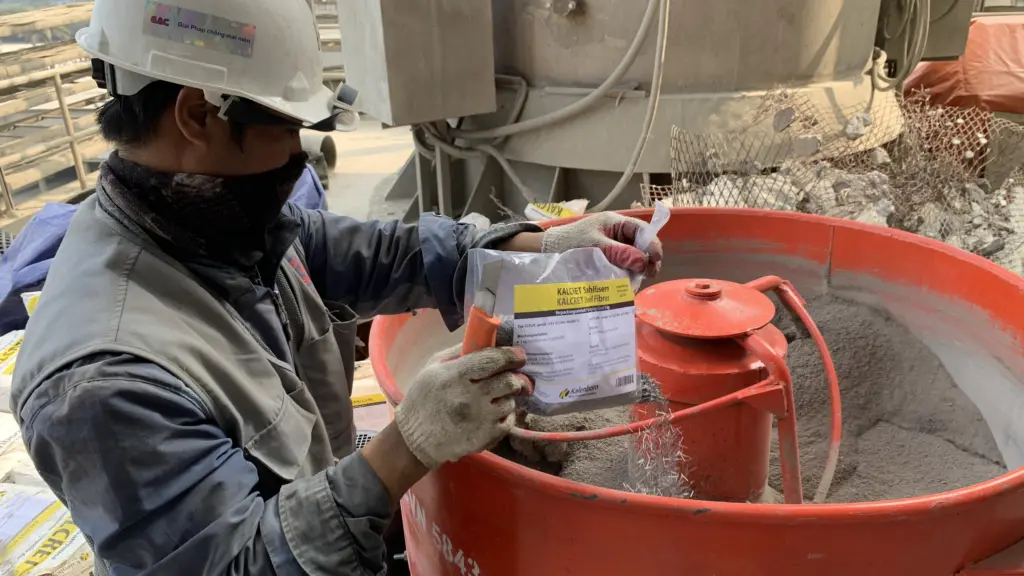
Electrodes, welding wire, adhesive and hard-compound powder each have their own storage requirements. Their quality can change without immediately visible signs.
These conditions should be managed through consumable records rather than relying only on visual inspection of the packaging.
For welding consumables in particular, a welding procedure may be correctly controlled in all other respects but still encounter problems if the consumables have absorbed moisture during storage.
12. Material condition at receipt should be documented
According to the source material, the manufacturer’s guarantee mainly covers the mechanical properties and dimensional tolerances of the plate at dispatch and does not cover damage arising from subsequent unloading, storage or preservation.
Two records are therefore particularly valuable:
- receiving inspection report
- photographs taken during unloading
If the material already has deformation or damage when received, these records help establish the original condition.
If a problem only appears after a period of storage, receiving and storage records help narrow down the stage during which the deviation may have occurred.
13. Items that can be checked immediately in the warehouse
Several conditions can be checked quickly by sight and touch during a warehouse inspection.
These checks help identify deviations arising during storage rather than waiting until the material has already reached the workshop.
Two conditions should be particularly avoided:
- plate stacking that creates three-point bending
- returning leftover plate to storage with sharp cut corners
These two issues are identified in the overview article and fall directly within the scope of Part 6.
14. Responsibilities during handling and storage
Responsibilities should be clearly defined from purchasing and receiving through to transfer to the workshop or return to the warehouse.
The responsibility in the final row should remain clear.
The workshop is where new cut edges are created and where the material identification is still available. Edge treatment and relabelling should therefore be completed before leftover plate is handed back to the warehouse.
This work should not be transferred to the warehouse after the plate has already left the fabrication flow.
15. Items to review before transferring the material to the next operation
Before material leaves the warehouse or returns to the workshop, confirm that:
- the plate has no obvious deflection caused by improper support
- support points between layers are vertically aligned
- the surface condition has been inspected
- the material has not been adversely affected by rain or moisture beyond the applicable storage conditions
- the plate temperature has stabilized before measurement or fabrication
- the primer type has been identified if the material is about to proceed to welding
- material identification remains complete
- leftover plate has had sharp cut corners ground smooth
- storage conditions for electrodes, adhesive and mortar powder remain within the applicable requirements
- receiving records and original photographs remain available for traceability
The purpose of this review is to prevent a deviation originating in storage from being carried into cutting, welding, lining or installation.
16. Scope of application and references
This article focuses on handling, storage and preservation after material receipt, together with the control points that should be checked before transferring the material to the next operation.
Three points should be noted.
First, the number and spacing of support points depend on plate length, thickness and material grade. This article provides principles for limiting deflection and checking plate condition rather than a single formula applicable to every case.
Second, delayed cracking does not have a fixed time of occurrence. According to the documentation being used, it may appear after several hours or several days.
Third, some information, such as the initial condition of the material, oil treatment and shop primer, needs to be recorded during ordering and receiving. This article uses that information to support storage and material transfer within the warehouse.
EN ISO 8501-1 is referenced for surface preparation before the material moves to the next operation.
The three-point bending mechanism and factors associated with delayed-cracking risk are explained using mechanical and metallurgical principles. Inspections of plate condition, timber spacers, cut corners and warehouse storage conditions are based on workshop practices used in Gia Anh’s methodology.