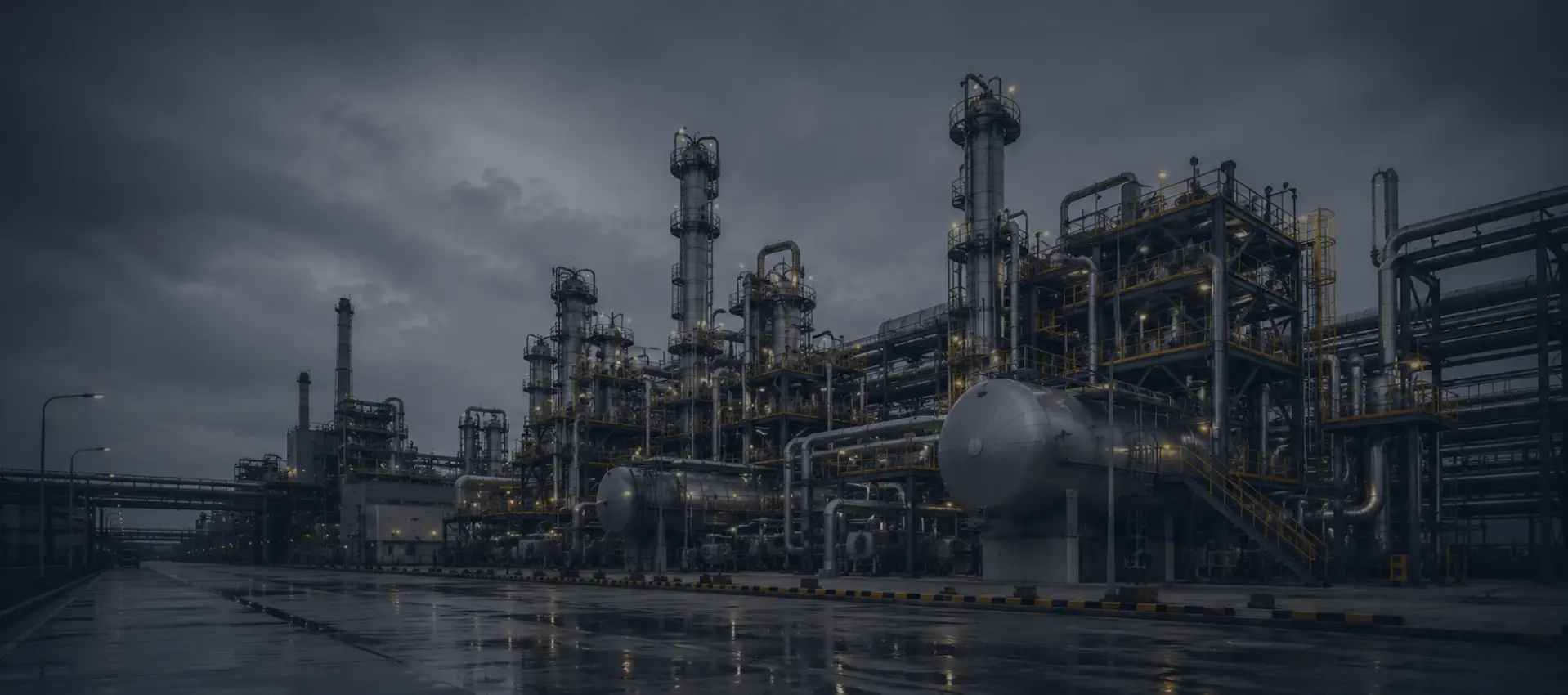
Wear & corrosion protection for chemical plants
Control the dual threat of acid wear
Durable operation in chemical environments
Protect equipment against acidic abrasion
Control both abrasive wear and chemical corrosion
Equipment in chemical plants is often exposed simultaneously to mechanical wear and chemical corrosion. Material selection must therefore address both mechanisms together

INCORRECT APPROACHES
- Focusing only on the corrosion resistance of stainless steel. SUS 304 or SUS 316 provides good chemical resistance, but its hardness is relatively low at around 150–200 HBW. When exposed to abrasive ore slurry, hard particles can continuously scratch and wear away the steel surface
- Using epoxy adhesive alone for ceramic linings in high-temperature areas. High temperatures or aggressive chemicals can soften or degrade the adhesive layer, weakening ceramic fixation even when the ceramic itself remains highly wear resistant
- Using thin composite linings in high-speed particle environments. FRP offers chemical resistance, but thin composite layers can still be rapidly eroded by abrasive particles, allowing continued wear to develop underneath

SOLUTION SELECTION PRINCIPLES
- Combine high hardness with corrosion resistance. Hardox HiAce provides a hardness range of 425–475 HBW, helping protect equipment against severe sliding abrasion while improving service life in corrosive environments compared with conventional wear-resistant steel
- Combine high-temperature ceramics with mechanical fixation. Kalcor can withstand temperatures up to 1,000°C, while Kalsica provides excellent chemical resistance. Mechanical weld-on fixation helps maintain lining stability under severe thermal and vibration conditions
- Create a continuous wear- and chemical-resistant barrier. Kalpoxy 150 or a 25mm-thick monolithic Kalcret lining forms a hard, jointless protective layer, helping reduce the risk of chemical penetration and wear at the steel substrate
Mapping wear & corrosion protection solutions across chemical plants
GAC designs specialized chemical-resistant lining systems for equipment exposed to the most severe operating conditions in the plant

Acid slurry agitators & tanks
Agitator blades and tank walls blending phosphate rock with sulfuric acid experience aggressive particle friction combined with acid corrosion, leading to blade breakage in 2–3 months.
Solution: Fabricate agitator blades and vessel linings using Hardox HiAce steel, or apply weld-on Kalocer alumina ceramic tiles to fully isolate the steel core.

Chemical slurry pipelines & waste outfalls
Aggressive chemical slurry and highly acidic/alkaline waste streams erode pipeline inner walls, causing underground line blowouts and environmental contamination.
Solution: Install steel pipes lined internally with Abresist Fused Cast Basalt (20mm thickness), which is fully chemically inert, or apply highly chemical-resistant Kalen sliding plastics.

Fertilizer cyclones & sticky raw material hoppers
High-moisture fertilizer granules (NPK, DAP) stick aggressively to steel hoppers, causing flow bottlenecks, while chemical ammonia/sulfur compounds degrade and thin the steel walls.
Solution: Line hoppers with Tivar 1000 FG UHMW-PE (FDA-approved for food and chemical applications) to eliminate sticky buildup, or apply Kalpoxy 150 wear-resistant epoxy coatings.

Chemical rotary dryers & hot flue gas ducts
Hot flue gases at 400°C–800°C carrying fine, acidic particulates erode the inner shells of drying drums and flue gas ducting.
Solution: Protect with Kalcor Zirconium Corundum lining tiles (resisting thermal shocks up to 1,000°C) or apply monolithic Kalcret erosion-resistant castables.
Standardized workflow for chemical leakage mitigation
GAC protects plant assets through a rigorous engineering process, controlling lining integrity from initial diagnostics through final leak testing

Chemical environment & thermal profiling
We map the operating pH levels, record chemical concentration types, measure peak operating temperatures, and calculate mechanical slide-wear velocity

Chemical compatibility engineering
We verify the chemical compatibility of Kalfix/Kalpoxy adhesives against the plant's process solvents and design custom 3D CAD lining layout maps to conceal metal fasteners

SA 2.5 sandblasting & precision profiling
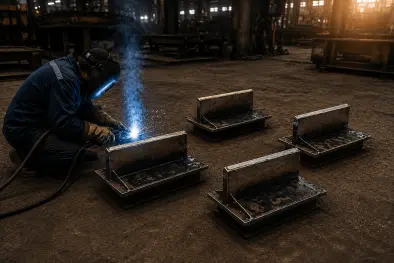
We perform white-metal sandblasting to SA 2.5 standards, ensuring perfect chemical-mechanical adhesion of wear polymers. Hardox HiAce sheets are cut and cold-bent at our workshop
Certified anti-corrosive installation
GAC certified crews apply monolithic Kalpoxy 150 coatings or weld mechanical-lock Kalocer ceramics under factory-certified supervision
Holiday leak detection & written warranty
We execute high-voltage spark testing for lining integrity, deliver original European CO/CQ documents, and back the system with a 12-to-24-month written zero-leakage warranty
Plants successfully using Gia Anh's solutions
Official Authorized Partner of the World’s Leading Brands


Products and services

Specialized chemically resistant, anti-corrosive, and wear-resistant materials
Hardox HiAce Hybrid Acid-Resistant Wear Plate (SSAB - Sweden): Wear plates in 4 - 15mm thicknesses with 425 - 475 HBW surface hardness, specifically formulated to resist simultaneous dynamic sliding abrasion and acidic corrosion.
Kalcor Fused Silica-Zirconia Corundum Ceramics (Kalenborn - Germany): Fused cast ceramic tiles resisting continuous operating temperatures up to 1,000°C, fully chemically inert to aggressive inorganic and organic acids.
Kalsica Silicon Carbide Ceramics: Nitrogen-bonded silicon carbide tiles delivering high mechanical hardness combined with chemical resistance against hot sulfur and chlorine compounds.
Kalpoxy 150 Chemical-Resistant Monolithic Coating: Two-component, particle-filled polymer wear compound designed to act as an impermeable, wear-resistant chemical barrier.
Tivar 1000 FG FDA-Approved UHMW-PE: Food and chemical-grade low-friction sheets, designed to eliminate sticky DAP and NPK fertilizer buildup in dosing hoppers.

Electrochemical corrosion diagnostics & combined lining engineering
Mapping chemical environments including pH levels, acid/alkali concentrations, peak chemical reaction temperatures, and calculating physical sliding abrasion velocities of slurry particles.
FEA stress modeling and corrosion profiling to engineer optimal combined linings pairing hard-wear metals with acid-resistant non-metallic barriers.

SA 2.5 white-metal sandblasting & workshop fabrication at Hung Yen plant
Executing high-intensity grit blasting to achieve the SA 2.5 cleanliness standard, removing all iron oxides and scale to ensure absolute chemical-mechanical adhesion of wear epoxies and ceramics.
Utilizing CNC Underwater Plasma Arc Cutting to profile Hardox HiAce agitator blades, keeping the cut edge cooled to preserve mechanical yield and chemical-corrosion resistance.
Certified field installation & monolithic sealing
On-site installation of weld-on Kalocer ceramic linings featuring integrated mechanical weld studs and protective ceramic caps for chemical chutes and cyclones.
Applying jointless, monolithic Kalpoxy 150 wear-resistant linings to seal and protect underground acid sump tanks.
Executing high-voltage Holiday Spark Testing to guarantee a 100% pinhole-free, seamless corrosion barrier.
Key Clients


Frequently Asked Questions
For high-temperature applications, Hardox® HiTemp (300°C–500°C) or KALMETALL W145 (up to 750°C) is recommended. For acidic environments, Hardox® HiAce provides outstanding resistance to chemical corrosion, with performance comparable to stainless steel in many applications.
Non-metallic materials are recommended in applications involving severe chemical corrosion, where extremely low friction or superior anti-stick performance is required.
Gia Anh evaluates the wear mechanism, chemical environment, operating temperature, and the adhesion characteristics of the conveyed material before selecting the appropriate non-metallic solution.
No. Wear-resistant steel is only suitable for specific operating conditions. In many applications, ceramic linings or combined lining solutions provide better performance and significantly longer service life.
Because the same equipment can operate under completely different conditions at different plants. Recommending a material without understanding the actual wear mechanism may result in unnecessary costs or an ineffective solution.
Request for solution consultation
Gia Anh's expert will contact you within 24 hours to analyze the problem and provide a suitable solution.