Services
On-site survey & wear protection solution design
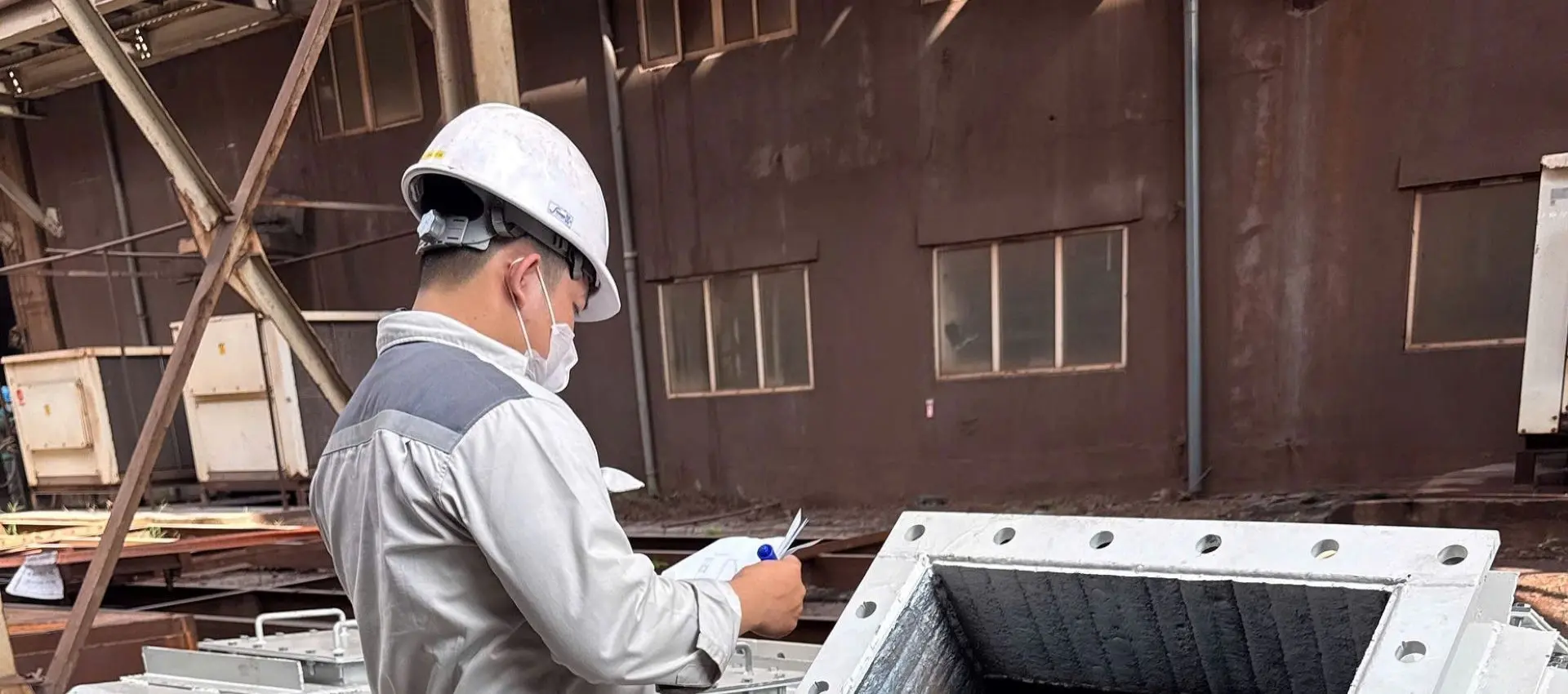
The technical team will conduct on-site surveys, measurements and assessments to design a solution tailored to each piece of equipment, focusing on protection, installation accuracy and long-term performance, helping the plant proactively plan repairs and maintenance
From on-site surveys to suitable material solutions
On-site surveys and solution design form the foundation of equipment maintenance. With years of experience, GAC engineers conduct surveys at actual operating locations, such as blast furnace hoppers, cyclone preheater towers in cement plants, coal mills in thermal power plants and the undercarriage areas of heavy-duty mining vehicles. Parameters such as free-fall height, operating temperature and ore particle size are recorded and analyzed to determine a suitable solution for each set of operating conditions.
Based on on-site survey data, GAC designs combined lining solutions (Combined Lining) in accordance with European standards, aiming to reduce sticking and material buildup, limit the risk of perforation and leakage, and improve protection of the equipment structure during operation.
Requiring on-site surveys and solution design
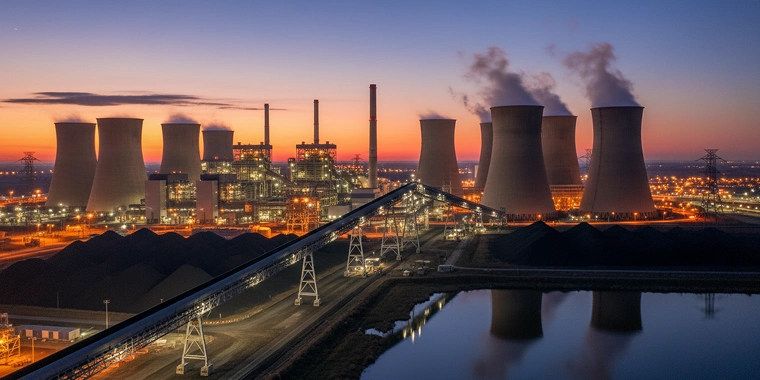
Heavy industrial plants

Industrial engineering & construction contractors

Machining & mechanical fabrication workshops

- Industrial trading & supply companies
Typical implementation service categories

Piping and fittings
- Straight pipes
- Bends and elbows
- Y-branches and tees
- Flanges and pipe connectors

Chutes and material transfer assemblies
- Transfer chutes
- Guide chutes
- Transition assemblies between equipment
- Various types of hoppers

Equipment components
- Material scraper plates
- Material separation blades
- Screen surface components
- Replacement assemblies tailored to installation locations

Wear-resistant linings
- Wear-resistant steel linings
- Wear-resistant ceramic linings
- Kalcret linings
- Structures combining steel and non-metallic materials
When the solution is engineered before installation

Extend equipment service life
Field surveys and accurate material selection can significantly extend wear life. At Than Cao Sơn Mine, 16Mn steel showed a wear rate of approximately 1.44mm/month, while Hardox 500 TUF recorded approximately 0.45mm/month, providing a clear basis for optimizing liner service life

Eliminate bottlenecks at critical grinding areas
A combined lining design using Tivar 88-2 in sticky-material zones and suitable wear-resistant materials in high-abrasion areas helps maintain stable material flow, reduce blockage, and extend maintenance intervals

Prevent emergency shutdowns
Proper lining design for pipe elbows, ducts, and high-wear equipment helps reduce the risk of rupture, leakage, and unplanned production stoppages caused by localized wear
What Makes Gia Anh Different?

One-Stop Solutions
From inspection and material selection to fabrication and on-site installation, Gia Anh supports customers throughout the entire process, eliminating the need to work with multiple providers

GAC 3D Map Material Selection Process
More than material grade, GAC 3D Map helps select the right material type and mechanical properties for each application, ensuring performance and operational safety

Global Experience Library
As the exclusive representative of three world-leading material manufacturers, Gia Anh has access to proven global case studies, enabling us to deliver the most suitable solution for each customer's application
Implementation process

STEP 01

STEP 02

STEP 03

STEP 04

STEP 05

STEP 06
Customer Feedback on Gia Anh
Frequently Asked Questions
Bi-metal wear plate is recommended when a uniform alloy layer thickness and consistent hardness are required. Compared with on-site hardfacing, it provides more stable service life while reducing maintenance time.
KALMETALL W100 is manufactured using the Metal-Arc Process, which distributes ultra-hard chromium carbide particles uniformly throughout the entire wear layer. In contrast, conventional flux-cored hardfaced steel has carbide particles concentrated mainly near the surface due to dilution during welding, resulting in lower wear resistance and shorter service life.
This occurs because epoxy adhesive has limited heat resistance (approximately 80°C) and offers virtually no wear resistance. Under high-velocity material flow, the adhesive joints erode first, creating gaps that cause entire ceramic sections to detach even though the ceramic itself has not yet worn out.
Using KALCRET castable compound, GAC creates a completely jointless lining that eliminates adhesive joints—the weakest point in conventional lining systems. The result is a monolithic protective layer that provides exceptional durability against severe wear.
ABRESIST cast basalt is ideal for sliding abrasion applications such as ash or wet slag handling. It provides a smooth surface and can withstand temperatures up to 350°C. KALOCER ceramic offers higher hardness (9 on the Mohs scale) and heat resistance up to 1,000°C, making it the preferred choice for severe erosion areas such as cyclones and classifier blades.
Request for solution consultation
Gia Anh's expert will contact you within 24 hours to analyze the problem and provide a suitable solution.