Wear & anti-sticking protection for cement plants
Maintain stable material flow
Optimize operational performance
Eliminate silo material build-up and extend the service life of chutes and classifier blades by 3–4 times using specialized materials
Identify the right wear and sticking mechanisms to maintain stable material flow
In cement plants, the operating conditions and material characteristics at each location are not the same. Wear and sticking mechanisms must therefore be evaluated together

INCORRECT APPROACHES
-
Using air cannons or mechanical impact to clear blockages: This can cause local deformation of the hopper or silo walls without addressing the root cause. Repeated intervention may also affect the internal lining system and equipment structure.
-
Evaluating material sticking only by moisture content: The sticking behavior of raw materials also depends on particle size, wall friction, material composition and actual flow conditions. Moisture alone is not sufficient to determine the appropriate solution.
- Using one wear-resistant material for every location: Each position is exposed to different combinations of sliding wear, impact, temperature and sticking. A single material cannot provide optimum performance across the entire system.

SOLUTION SELECTION PRINCIPLES
-
Reduce wall friction with Wear-resistant welding consumables liners: Its low-friction surface helps maintain stable material flow through silos and hoppers, reducing bridging and rat-holing.
-
Select materials according to the actual wear mechanism: Use Wear-resistant welding consumables for sticking-prone areas; Kalocer or Kalcret for severe wear zones; and Abresist for suitable pneumatic or hydraulic conveying applications.
- Combine multiple materials according to each operating zone: Combined Linings allow each material to be positioned where its mechanical and physical properties deliver the greatest effectiveness.
Mapping wear & sticking hotspots across cement production lines
GAC designs tailored solutions for each critical position from raw material handling to finished cement production

Silos & hoppers for wet clay, gypsum & raw materials
High-moisture clay and iron ore stick to the steel hopper cone, creating rat-holes and bridging. Raw mill feeding rates drop significantly due to interrupted flows.
Solution: Line the hopper cone internally with 12-15mm Wear-resistant welding consumables UHMW-PE sheets, installed using our signature weld-in capping system with countersunk screws.

Coal mill static & dynamic classifiers
Coarse coal particles continuously blast against the classifier blades at high velocities, eroding the blade edges. The widening gaps result in coarse coal dust passing through, lowering kiln burner efficiency.
Solution: Protect classifier blades with lightweight, 10mm-thick Kalocer alumina ceramic tiles bonded with heat-resistant Kalfix epoxy, ensuring no negative impact on the fan's dynamic balance.

Raw mill chutes & hot clinker discharge chutes
Massive limestone lumps drop into raw mill feed chutes, and hot clinker slides down discharge chutes, causing severe abrasive sliding wear and structural impact.
Solution: Upgrade chute floors with 16mm Hardox 500 TUF plates, or line them with 25mm-thick Kalocer weld-on ceramic modules for maximum thermal-mechanical resistance.

Pulverized coal transport pipes & preheater cyclones
Sharp, abrasive coal dust and hot preheater raw meal continuously erode pipe elbows, leading to structural failures and dust leaks.
Solution: Install prefabricated pipe elbows lined with 25mm Kalcret BTX compound over expanded steel mesh, or implement Abresist fused cast basalt-lined pipes for maintenance-free coal-dust transport.
A closed-loop process helps control risks for the plant
GAC works alongside plant maintenance teams from initial survey and diagnostics through installation, commissioning and warranty

On-site diagnostics
We measure raw material moisture, calculate gas velocities, evaluate dust particle sizes, and take 3D scans of the silo cones and pipe bends

Combined material engineering
We engineer systems integrating Wear-resistant welding consumables linings and Kalocer/Kalcret wear linings to achieve synchronized wear-life across all components

Precision workshop fabrication
Wear-resistant welding consumables sheets are CNC-machined, Hardox plates are precisely cut, and steel pipe elbow jackets are pre-engineered to receive Kalcret casting at our Hưng Yên facility
Certified field installation
Skilled GAC teams apply jointless Kalcret linings, install mechanical weld-on Kalocer ceramics, or secure Wear-resistant welding consumables on-site under factory-trained supervision
Handover & written warranty
We apply Kalcure curing compounds, deliver original CO/CQ certifications, and issue a written performance warranty of up to 36-48 months for silo lining systems
Plants successfully using Gia Anh's solutions
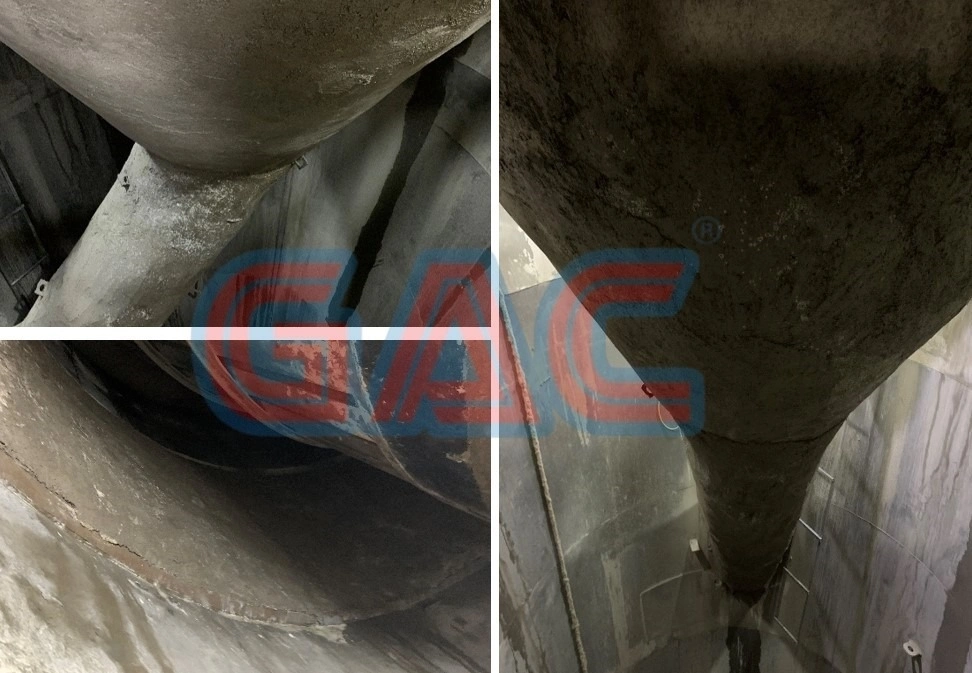
Wear protection project for the cement mill – VICEM Tam Diep cement plant
In December 2020, Gia Anh Investment Trading Co., Ltd. carried out a wear protection project for the cement mill at VICEM Tam Diep Cement Plant. The main treatment areas were...
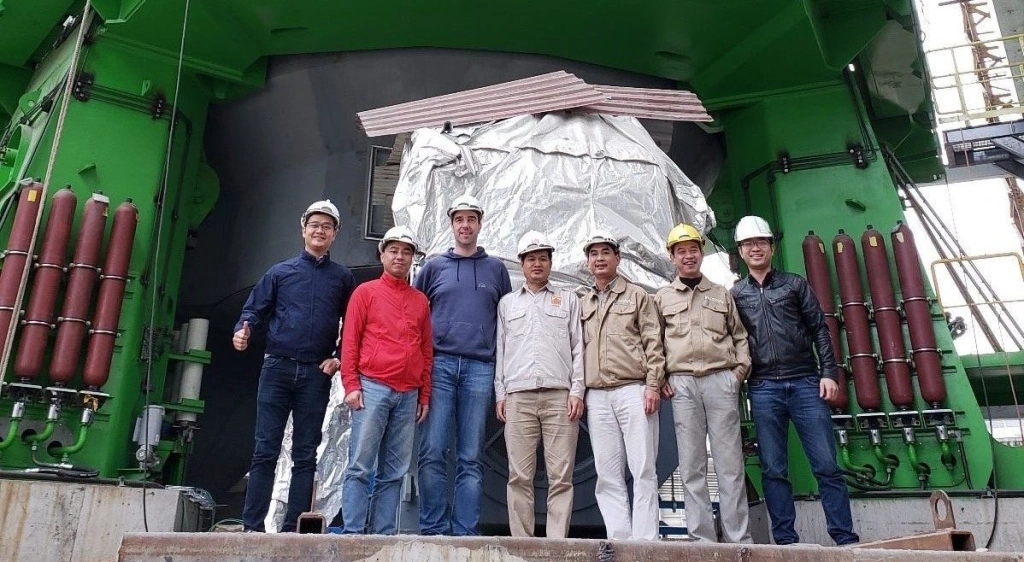
New cement mill installation project – VICEM Hoang Thach Cement Plant
In November 2019, Gia Anh Investment Trading Co., Ltd. carried out a new cement mill installation project at VICEM Hoang Thach Cement Plant. The wear protection work focused on the...
Official Authorized Partner of the World’s Leading Brands


Products and services

Specialized wear-resistant & anti-sticking materials portfolio
Wear-resistant welding consumables UHMW-PE Anti-Sticking Liners (Quadrant - USA/Belgium): Imported plates in 10 - 20mm thicknesses, specifically engineered to eliminate blockages of wet clay, limestone, and high-moisture gypsum.
Kalocer High-Alumina Wear-Resistant Ceramic Tiles (Germany): Dense tiles (Al₂O₃ >92%) with a hardness of 1,050 HV1, resisting severe sliding friction inside dynamic separators and clinker chutes.
Genuine Swedish Hardox Wear Plate: Through-hardened Hardox 450, 500, and 500 TUF plates delivering extreme impact resistance and cold-bending properties for raw mill feed chutes.
Kalcret Cement-Bonded Hard Compound: Silicon carbide-filled wear mortar achieving high compressive strength (>130 MPa) and thermal stability up to 1,200°C for pneumatic coal dust ducts.
Abresist Fused Cast Basalt Linings: Centrifugally cast spools with an ultra-smooth finish and a hardness of 8 Mohs, optimized for wet sand-clay slurries and hydraulic ash-handling lines.

On-site wear diagnostics & dynamic combined engineering
On-site surveys to analyze material moisture profiles, dynamic sliding angles, gas flow velocities, dust grain sizes, and coal-mill blower pressure parameters.
Advanced 3D Laser Scanning to capture exact dimensions of silo cones and eroded pipe bends, ensuring precision layouts modeled on the "Combined Linings" concept.

Precision workshop mechanical fabrication at GAC Hung Yen plant
CNC custom profiling of Wear-resistant welding consumables sheets, incorporating pre-bored countersunk holes to prevent fastener exposure and material catch points.
Heavy-duty hydraulic press-brake forming of Hardox wear liners and rolling of steel jackets for Kalcret-lined pipe elbows.
Certified monolithic casting, ceramic bonding & weld-on installation
On-site installation of weld-on Kalocer ceramics using dual-fixation (high-bond Kalfix E20 epoxy + mechanical weld-on studs with protective ceramic caps) for hot, vibrating clinker chutes.
Anchoring expanded steel mesh and casting/trowelling jointless Kalcret BTX monolithic wear coatings (25-30mm thick) on pneumatic coal bends.
Key Clients


Frequently Asked Questions
Not all wear problems have the same root cause. Even within the same piece of equipment, different areas may be subjected to sliding abrasion, impact, high-velocity material flow, elevated temperatures, or chemical attack.
Simply replacing the existing material with a harder one without identifying the actual wear mechanism may not improve equipment life and can even create additional failure modes.
Gia Anh follows a diagnosis-first approach. Our engineers conduct on-site inspections, analyze operating conditions and wear mechanisms, and then recommend the most suitable lining material for each individual location instead of applying a one-material solution across the entire system.
This occurs because epoxy adhesive has limited heat resistance (approximately 80°C) and offers virtually no wear resistance. Under high-velocity material flow, the adhesive joints erode first, creating gaps that cause entire ceramic sections to detach even though the ceramic itself has not yet worn out.
It balances the service life of individual components, reduces localized replacement frequency, and minimizes the customer’s total operating costs.
This approach combines different wear-resistant materials (such as ABRESIST, KALOCER, and KALMETALL) within the same system according to the wear severity of each area. It balances the service life of all components, eliminates unnecessary replacement of parts that still have usable life, and ultimately optimizes overall operating costs.
Gia Anh provides complete turnkey wear protection solutions, including on-site inspection, failure analysis, engineering design, material supply, fabrication, installation, and final acceptance.
Managing the entire project through a single contractor ensures seamless coordination between materials, design, and installation, minimizing unexpected issues during maintenance. For scheduled shutdown projects, Gia Anh works closely with the plant to prepare materials and installation plans in advance, reducing maintenance time and returning equipment to operation on schedule.
Request for solution consultation
Gia Anh's expert will contact you within 24 hours to analyze the problem and provide a suitable solution.