Part 5: Welding and fabrication of High-Strength Steel for vehicle structures
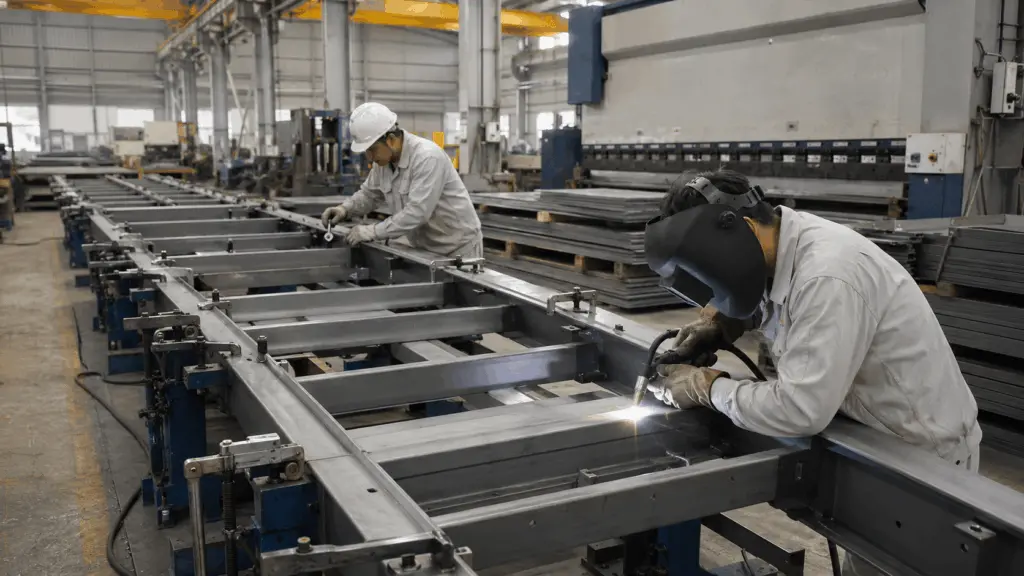
Replacing conventional steel with High-Strength Steel does not mean that the load-carrying capacity of the entire structure will automatically increase by the same proportion. In vehicle structures subjected to dynamic loading, welds and the heat-affected zone still require close control.
When the steel grade changes, the fabrication process also needs to be reviewed, including welding consumables, preheating, interpass temperature, joint design and bending direction.
High-Strength Steel can therefore deliver its intended benefits only when the material, structural design and fabrication process are treated as one integrated system.
1. The weld is part of the load-bearing structure
In dynamically loaded structures, welds are often located where geometry changes and stress concentrations occur.
If the base steel has a high yield strength but the welded joint does not meet the design requirements, the mechanical-property advantage of the base material cannot be fully translated into the performance of the complete structure.
The following factors need to be considered together:
- base steel grade
- joint type
- welding consumables
- thickness
- load transferred through the weld
- dynamic loading conditions
- welding procedure
- fabrication sequence
The objective is not to give the weld the highest possible mechanical properties. The objective is to ensure that the welded joint meets the load-carrying, fatigue and fabrication requirements defined by the design.
This is also why welding consumables should not be selected simply according to what is already available in the workshop.
2. Do not use the same welding guidance for High-Strength Steel and wear-resistant steel
High-Strength Steel and wear-resistant steel may both have high mechanical properties, but they are developed for different functions.
Each material group therefore needs to be welded according to the documentation and procedure applicable to the specific product being used.
A welding instruction developed for wear-resistant steel should not be applied directly to High-Strength Steel simply because the two plates look similar.
Conversely, a welding procedure for a load-bearing structure should not automatically be applied unchanged to a wear-resistant lining plate.
3. Determine preheating conditions
Preheating is not based on one fixed temperature for every steel grade.
The requirement depends on several factors, including at least:
- steel grade
- thickness at the joint
- chemical composition and carbon equivalent
- type of welding consumable
- diffusible hydrogen content
- degree of restraint
- environmental conditions
- welding heat input
EN 1011-2 can be used as a reference when determining welding conditions for ferritic steels, including preheating and control of hydrogen cracking risk.
The appropriate approach is therefore not “this is the temperature the workshop has always used”, but:
Which grade → What thickness → Which joint → Which procedure
4. Temperature needs to be controlled before and during welding
Checking the temperature once before striking the arc is not sufficient.
During fabrication, the material temperature can change after each weld pass or during the waiting period between passes.
Two temperature levels need to be controlled.
Preheat temperature
This is checked before welding begins to confirm that the material has reached the condition required by the procedure.
Interpass temperature
This is monitored during welding to ensure that the temperature remains within the specified range.
Temperature-indicating crayons may support quick checks, but where numerical records are required, equipment capable of providing clearer measurement and recording should be used.
More importantly, the measured values need to be recorded rather than relying only on verbal confirmation in the workshop.
5. Welding consumables need to match the requirements of the joint
Welding consumables should not be selected simply by matching the grade designation of the base steel.
The following need to be considered together:
- load requirements of the joint
- required yield strength and tensile strength
- required toughness
- dynamic loading conditions
- approved welding procedure
- steel manufacturer’s recommendations
- standard applicable to the structure
In some designs, welding consumables may be selected to provide properties comparable to the base steel. In other cases, consumables with lower or higher mechanical properties may be deliberately used if permitted by the design and welding procedure.
A safer principle is therefore:
Welding consumables need to meet the requirements of the joint and be defined in the welding procedure, rather than being selected according to individual workshop experience.
Distinguishing this from wear-resistant lining plate
For some wear-resistant lining plates, the weld primarily serves to hold the plate in its operating position rather than carrying structural loads in the same way as a beam or frame.
The principles used to select welding consumables may therefore be different.
Before selecting the consumable, it is necessary to determine:
Is the weld transferring structural load, or is it primarily fixing a lining plate in position?
The same selection rule should not be applied to both cases.
6. Changing the steel grade may also require different welding consumables
When moving from a lower steel grade to a higher grade of High-Strength Steel, the requirements for welding consumables may also change.
According to the welding-consumable recommendations by steel grade in the manufacturer technical documentation used for the perform® range, changing the steel grade may require a different consumable group.
This table is included only to show that welding consumables may change with the steel grade. Actual application needs to follow the correct documentation for the steel grade, welding consumable, thickness and welding procedure being used.
This affects both technical planning and procurement.
Changing the steel grade may require changes to:
- welding consumables
- storage requirements
- supply lead time
- inventory
- welding procedure
- welder requirements
The steel grade and welding solution should therefore be defined together during the design stage rather than treated as two independent decisions.
7. Verify the welding procedure and welding capability before fabrication
For load-bearing structures, welder experience is important, but it does not replace technical documentation.
Before fabrication, the following items should be checked as appropriate to the scope of work:
- approved welding procedure
- scope of procedure qualification
- welder qualification
- material group
- welding process
- welding position
- welding consumables
- validity of relevant qualification records
EN ISO 3834-2 is referenced in this knowledge series for comprehensive quality requirements for fusion welding of metallic materials.
The standard does not replace the drawing or the specific welding procedure, but it provides a quality-control framework for welding activities.
What should be avoided is allowing fabrication to proceed solely on the basis that “the welder has worked with this type of steel for many years” without checking whether the qualification records actually cover the work being performed.
8. Weld design needs to consider dynamic loading and fatigue
A weld that can carry static load is not necessarily a suitable detail for repeated loading.
For vehicle structures, fatigue needs to be considered from the connection-layout stage.
Three principles require particular attention:
This does not mean that every dynamically loaded area requires one specific weld type. Joint type, weld length and geometric details need to be determined according to the design and applicable standard.
Adding stiffeners does more than increase stiffness
Adding stiffeners can:
- reduce the effective plate span
- reduce deflection
- improve local stability
But it can also:
- increase mass
- increase total weld length
- create additional heat-affected zones
- create additional locations requiring fatigue control
By contrast, changing the cross-sectional geometry may improve geometric stiffness without necessarily increasing the number of welds by the same proportion.
The choice between adding stiffeners and changing the cross-sectional geometry therefore needs to be made during the design stage rather than waiting until the workshop discovers excessive deflection and then adding reinforcement.
9. Do not evaluate weld quality only by external appearance
A smooth, visually attractive weld with little spatter does not demonstrate that the entire welding process was performed correctly.
Joint quality also depends on:
- edge preparation
- welding consumables
- preheat temperature
- interpass temperature
- heat input
- welding sequence
- internal imperfections
- heat-affected zone
In particular, inspection should not focus only on the weld metal. The material immediately adjacent to the weld also needs to be considered.
If a crack is found running along the region beside the weld, the surface should not simply be ground out and covered with a new weld.
The cause needs to be investigated, including:
- thermal procedure
- hydrogen
- welding consumables
- stress state
- joint configuration
- fabrication sequence
Treating the visible indication without identifying the cause may allow the crack to reappear.
10. Rolling direction needs to be included on fabrication drawings
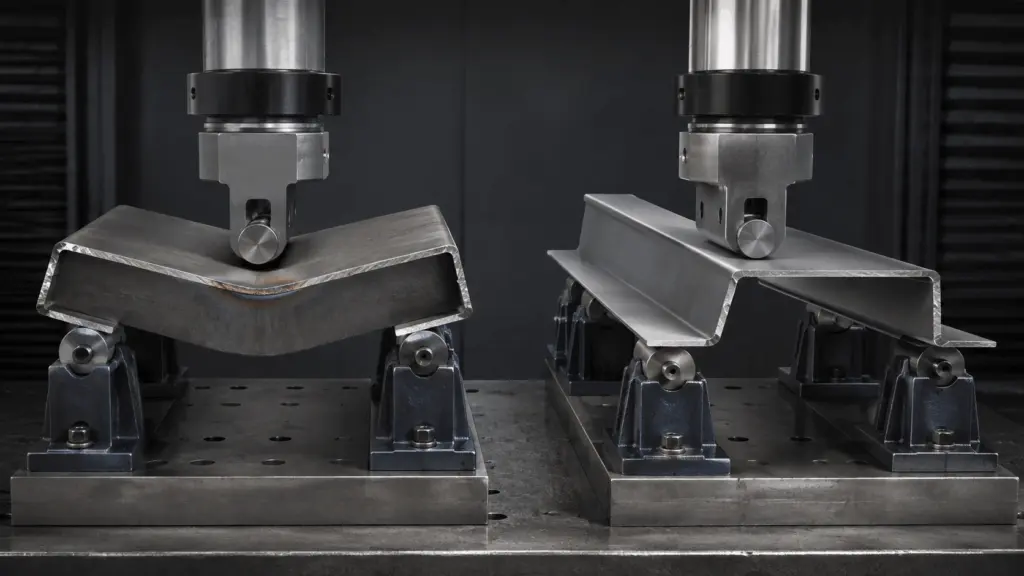
The bendability of High-Strength Steel depends on:
- steel grade
- thickness
- bending radius
- bending direction relative to the rolling direction
- forming equipment and method
Bending in different directions relative to the rolling direction should not automatically be assumed to use the same minimum bending radius.
If bending direction affects the fabrication requirement, it should therefore be shown directly on the drawing.
The workshop should not rotate the plate into whichever orientation is most convenient if the design depends on the rolling direction.
This becomes even more important when formability is being used to:
- create deeper sections
- reduce the number of stiffeners
- increase the moment of inertia
- reduce the number of welds
The material’s formability provides a real benefit only when the drawing and blank-cutting process maintain the orientation used in the design.
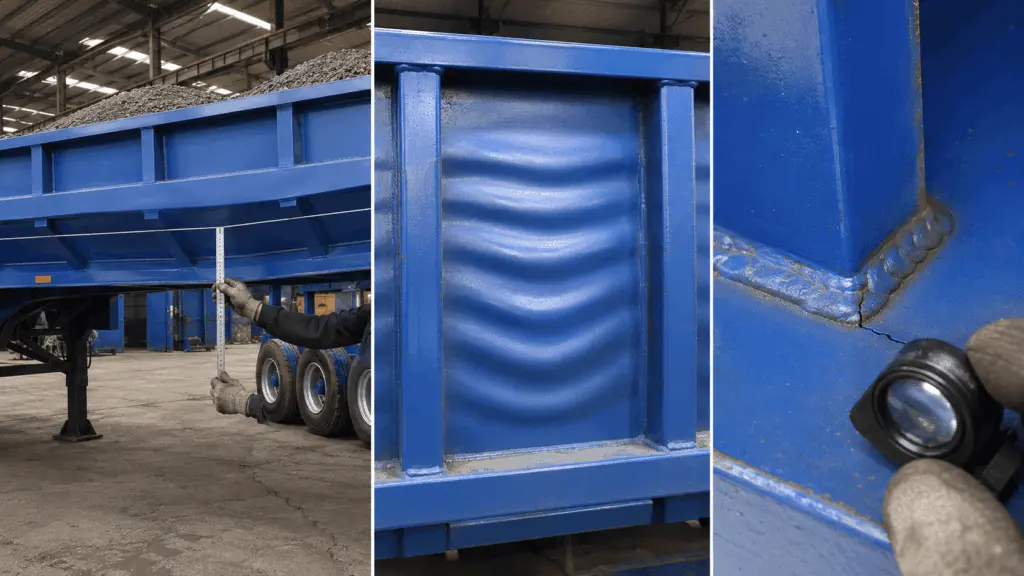
11. Items to check directly in the workshop
These inspection points should be defined in advance in the quality plan or fabrication documentation.
Checks should not be postponed until the entire structure has been assembled, particularly where information may be lost during fabrication.
12. Material traceability needs to be maintained after fabrication
After a steel plate is cut into multiple smaller components, the original identification mark may be lost.
Without a method for transferring and retaining identification information, it can become difficult to determine which plate or batch a finished component came from.
Fabrication records should therefore retain at least:
- material identification number
- location of use within the structure
- material grade and thickness
- welding consumable batch
- person performing the work
- applicable welding procedure
- key inspection points
- weld photographs where required
Traceability is not only required for acceptance inspection.
If a crack or deformation appears after a period of operation, this information allows the technical team to identify the exact material and procedure used at that location.
13. Issues that need to be resolved before completing fabrication release documentation
The structure should not be released while important information remains unresolved, such as:
- missing material identification number
- welding consumable used cannot be identified
- missing temperature records where temperature control was required
- welder qualification does not cover the work
- bending direction does not match the drawing
- signs of cracking with an unidentified cause
- weld inspection results remain unresolved
- missing records for mandatory inspection points
The objective is not to create more paperwork. It is to ensure that critical information can still be verified after the structure has been completed.
14. Responsibilities of the different functions
Welders need to work according to the defined procedure and should not independently change the welding consumables, thermal parameters or joint configuration for convenience.
15. Notes on applying this knowledge
First, preheat and interpass temperatures depend on the steel grade, thickness, joint conditions and welding procedure. There is no single value that applies to all High-Strength Steel.
Second, welding consumables need to be selected according to the requirements of the joint and the approved procedure. Welding consumables should not automatically be assumed to require a higher grade than the base steel, and welding rules for wear-resistant plate should not be transferred directly to load-bearing structures.
Third, changing the steel grade may require changes to welding consumables, procedures, storage and fabrication capability. These factors need to be considered before the material solution is finalized.
Fourth, a visually attractive weld is not sufficient evidence of quality. The heat-affected zone, thermal parameters, welding consumables and imperfections need to be inspected according to the requirements of the structure.
Fifth, adding stiffeners can improve deflection and stability but also increases the number of welds. For dynamically loaded structures, the effect on fatigue needs to be considered from the design stage.
Sixth, rolling direction and bending direction need to be controlled where the forming solution depends on them. Plate orientation should not be decided only after the drawing has been completed.
Seventh, this article identifies the key controls for welding and fabrication of High-Strength Steel. It does not replace the welding procedure, structural calculations or acceptance criteria for a specific project.
When changing to High-Strength Steel, the change does not stop at the steel plate itself. Welding consumables, temperature control, joint geometry, bending direction and traceability all need to follow the new design solution.
A properly controlled fabrication process preserves the benefits of the material in the completed structure instead of losing them at the joints and during fabrication.