Part 3: Surveying material flow blockage locations
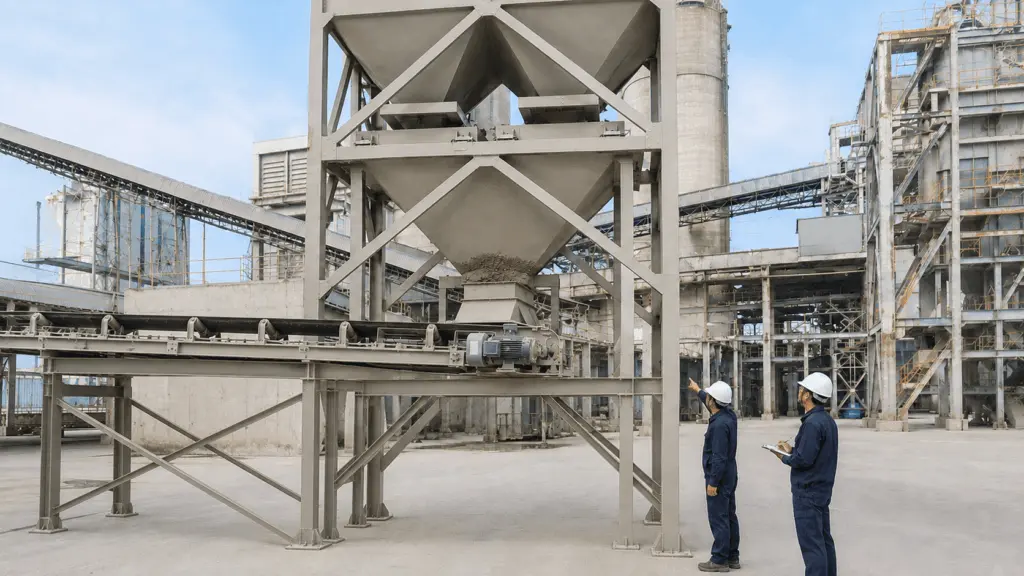
Surveying a material-flow blockage location differs from surveying wear from the outset in terms of approach. With wear, the damage marks remain on the surface after the equipment has stopped, allowing them to be observed, the remaining thickness to be measured, and the condition to be recorded on site. With material-flow blockage, the issue lies in the behavior of the material flow while the equipment is operating. Once the equipment stops, the very behavior that needs to be observed also disappears.
Therefore, a material-flow blockage survey needs to combine observation while the equipment is operating with measurement after the equipment has stopped. The data to be monitored also change: instead of measuring the remaining material thickness, it is necessary to record material build-up, accumulation rate, build-up location, surface geometry, and the operating intervention history.
1. Material-flow blockage surveys and wear surveys require two different approaches
The three main differences lie in the survey timing, the object to be measured, and the data groups used.
The greatest difference lies in the timing of the survey. Wear leaves marks on the surface, whereas material-flow blockage is reflected in the behavior of the material flow during operation.
If the survey is performed only after the equipment has stopped, the material build-up may still be visible, but it becomes difficult to determine whether the flow had previously slowed, stopped, formed an arch, or developed funnel flow. A material-flow blockage location therefore requires two access conditions: observation while the equipment is operating and measurement after the equipment has stopped.
Seasonal conditions need to be recorded together with the survey data
Material moisture may change with the season, and this is a baseline factor in the material-sticking problem.
If operating conditions differ between the dry season and the rainy season, a single survey does not represent the entire year. If the survey can only be conducted during one season, the report needs to clearly state which season the data represent and must not extrapolate the results to the other season.
2. First access: observe material-flow behavior while the equipment is operating
This is the stage at which information that cannot be reproduced after the equipment has stopped needs to be collected.
Among the information above, the time from blockage clearing until blockage recurs is particularly important. This indicator shows how quickly the accumulation cycle occurs and provides a basis for comparison before and after the solution is changed.
The forms of wall build-up, arching, and funnel flow are discussed in greater detail in the article Material sticking and flow blockage – different mechanisms, different solutions.
3. Second access: measure the actual condition after the equipment has stopped
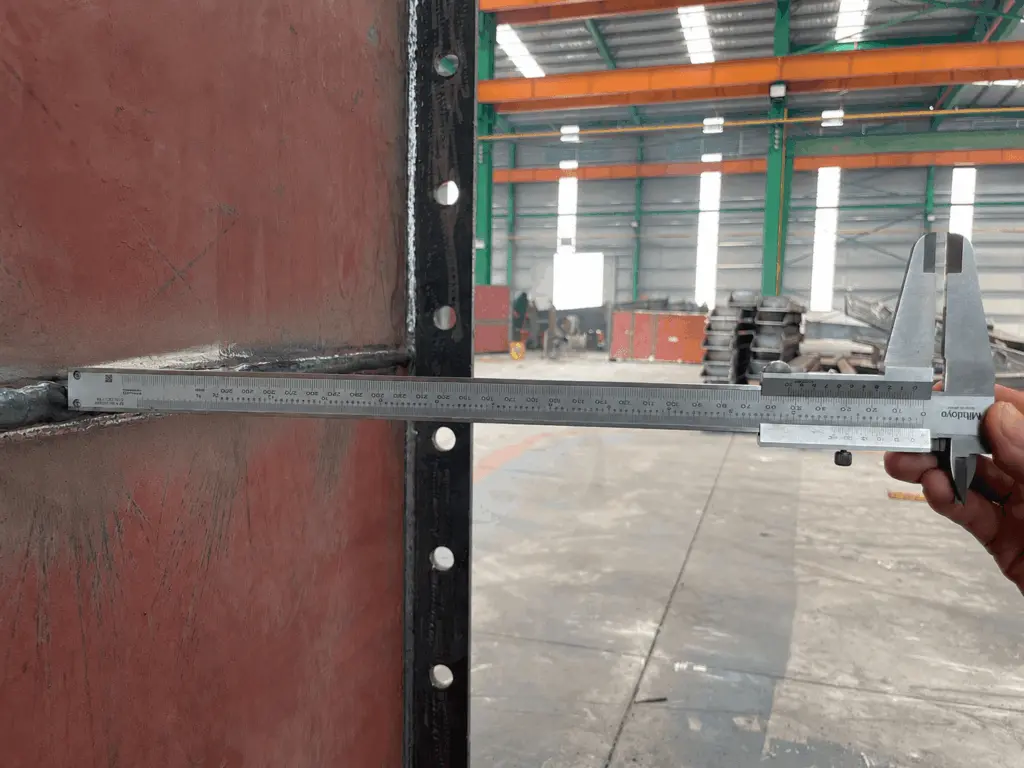
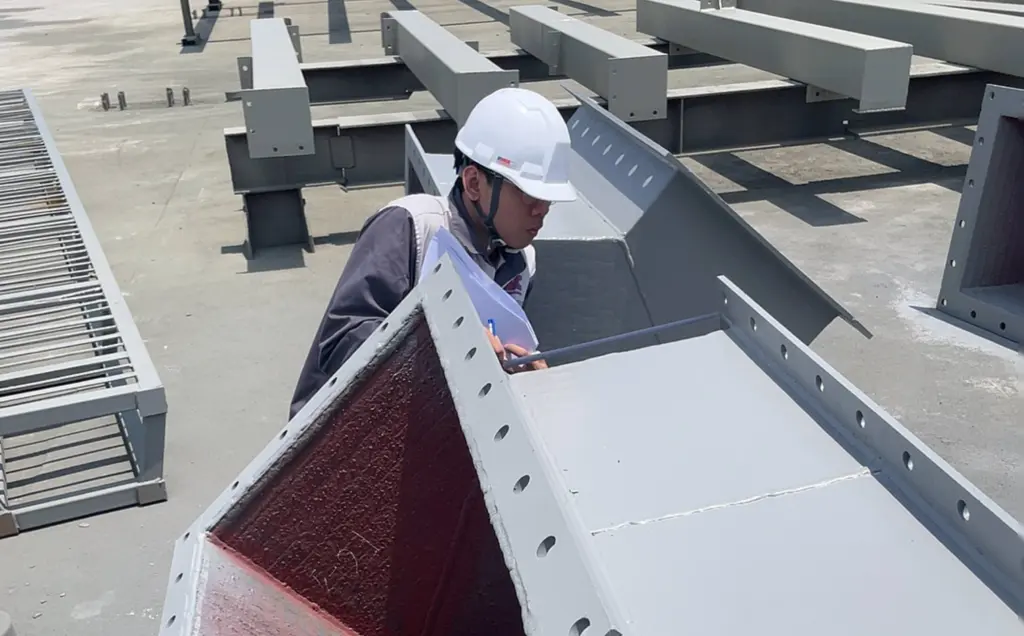
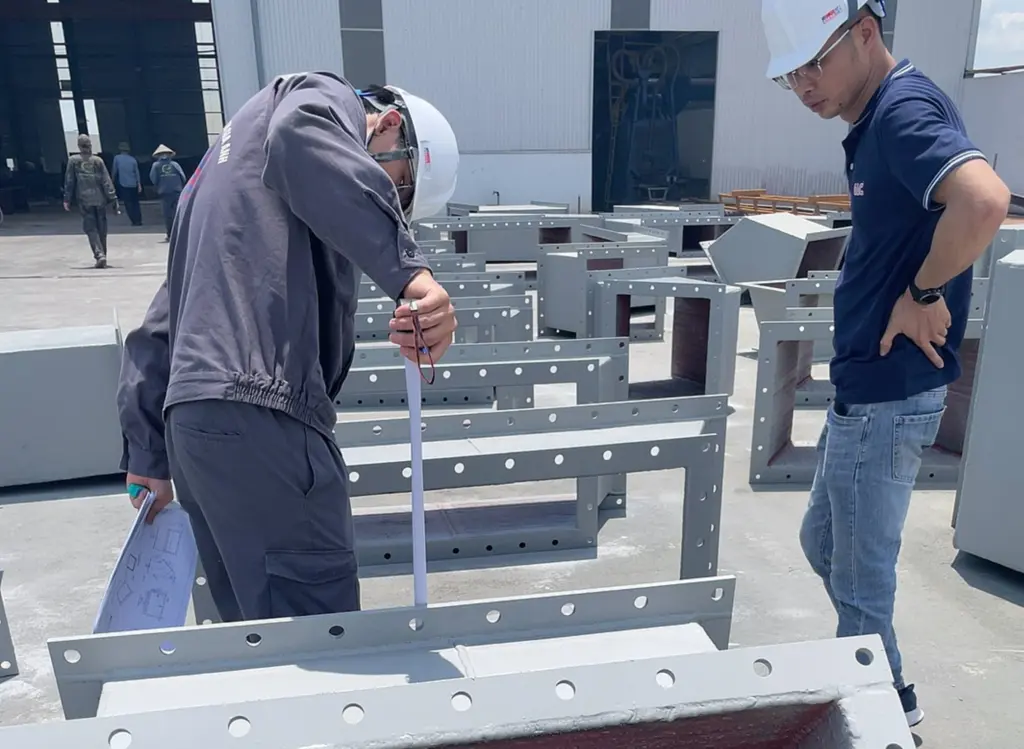
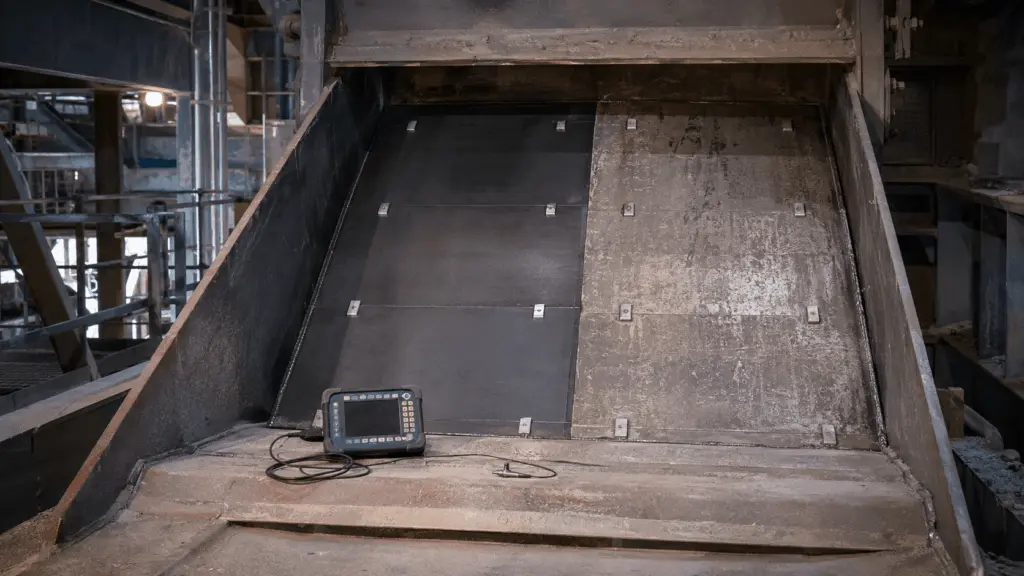
Once the equipment has stopped and the location can be accessed safely, the survey shifts from observing material-flow behavior to measuring the current material build-up and equipment geometry.
The angle that needs to be measured is the angle of the actual lining surface, not the angle formed by the accumulated material. If the angle is measured directly on the build-up layer, the data no longer represent the original equipment geometry.
The condition of the underlying lining surface also needs to be recorded. If the build-up has been removed but the lining surface remains intact, this information needs to be considered alongside the flow and material-sticking data when evaluating the cause.
4. A cross-sectional diagram helps represent build-up zones and material-flow path geometry
For a wear survey, fixed measurement points on the surface can be used. For material-flow blockage, a list of individual measurement points is insufficient because the build-up is often not distributed uniformly.
The cross-sectional diagram needs to show material-flow direction, concentrated build-up zones and thickness in each zone, wall angles in different sections, and locations where the cross-section narrows.
This form of representation makes it possible to view the relationship between geometry, flow direction, and accumulation location simultaneously.
For example, if build-up is concentrated immediately downstream of a narrowing in the cross-section, the change in flow in that area needs to be checked. If build-up occurs relatively uniformly around the walls, moisture and surface characteristics need to be examined further.
A cross-sectional diagram is particularly useful for the design stage because a list of individual measurements does not fully represent the overall geometry of the location.
5. Three flow indicators to be monitored
The material-sticking problem uses three main indicators:
The method for measuring each indicator, including the sliding-angle test using a sample plate and a protractor, is presented separately in the article 3 indicators that determine material sticking – moisture, stickiness, and sliding angle.
This section focuses on the survey process and how the location is represented using a cross-sectional diagram, without repeating the detailed measurement method for each indicator.
Blockage-clearing history needs to be quantified
In addition to the three indicators above, the intervention history needs to be taken from the operating log rather than being based only on estimates.
The information to be recorded includes the frequency of rodding, hammering, or air blasting and the labor time spent clearing blockages. These data help convert the assessment “frequent blockage” into information that can be monitored and compared.
6. Material-flow blockage surveys require a dedicated dataset
Wear problems and material-flow blockage problems monitor two different phenomena. Therefore, the survey form also needs to reflect the type of data that must be collected.
Two pieces of information are particularly important for a material-flow blockage survey: the cross-sectional diagram and the season of the survey.
The wear-survey form should not simply be reused with only a few additional fields added. The object being observed is different, so the way the data are organized also needs to change accordingly.
One indicator needs to be monitored continuously throughout the process
One of the most important figures in the survey is:
After intervention, how long does it take before the material flow becomes blocked again?
This information helps track the accumulation rate of the material build-up, provides a basis for comparison before and after the solution is changed, and can be combined with labor time to evaluate the effect on operations.
This is also data that can only be fully understood when considered within the actual operating condition of the equipment.
7. Responsibilities of the departments within the process
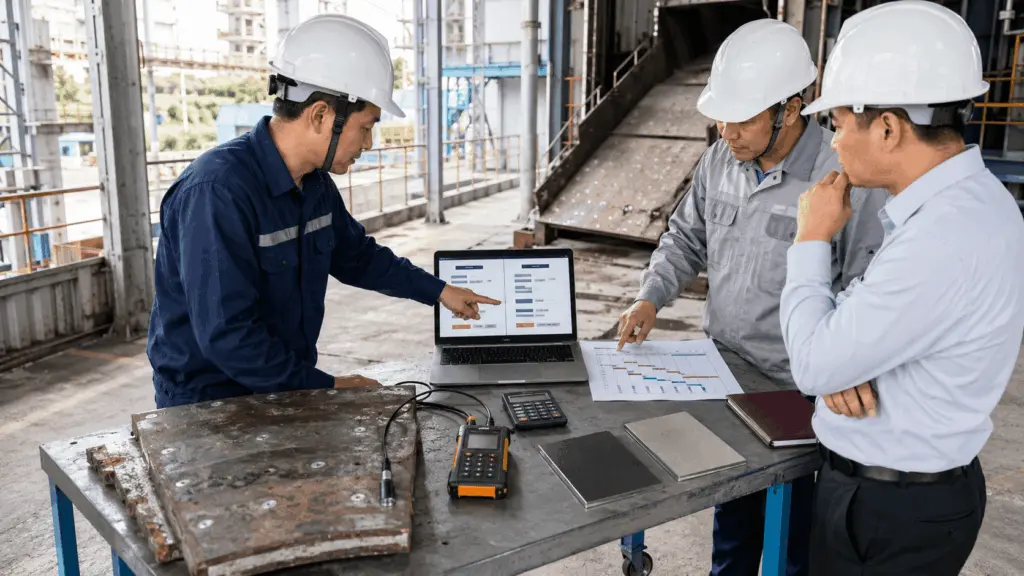
A material-flow blockage survey depends heavily on operating information because the subject that needs to be understood is the behavior of the material flow over time.
Most information concerning the development of blockage requires participation or confirmation from operations personnel. This is consistent with the nature of the problem: material-flow blockage occurs while the equipment is operating, and the operations team observes the location across multiple shifts and at multiple points in time.
8. Notes when surveying a material-flow blockage location
Four points need to remain clear when surveying a material-flow blockage location.
First, a complete survey requires two access conditions: observation while the equipment is operating and measurement after the equipment has stopped. If only one condition can be carried out, the report needs to clearly identify the information that remains missing.
Second, seasonal conditions may change the nature of the problem. If the survey is conducted during only one season, the results need to clearly state the survey period and must not automatically be extrapolated to the other season.
Third, the three flow indicators—moisture, stickiness, and sliding angle—are not covered together by one single common standard applicable to all three indicators.
Fourth, the survey stops at producing data, operating history, and a cross-sectional diagram as input for the next technical stage. This content does not replace the material-flow redesign stage.
A material-flow blockage survey needs to record both the condition of the material build-up and the behavior of the material flow over time. Measurements taken after the equipment has stopped show the current condition, while observations during operation help explain how the build-up formed and how it affected material flow.