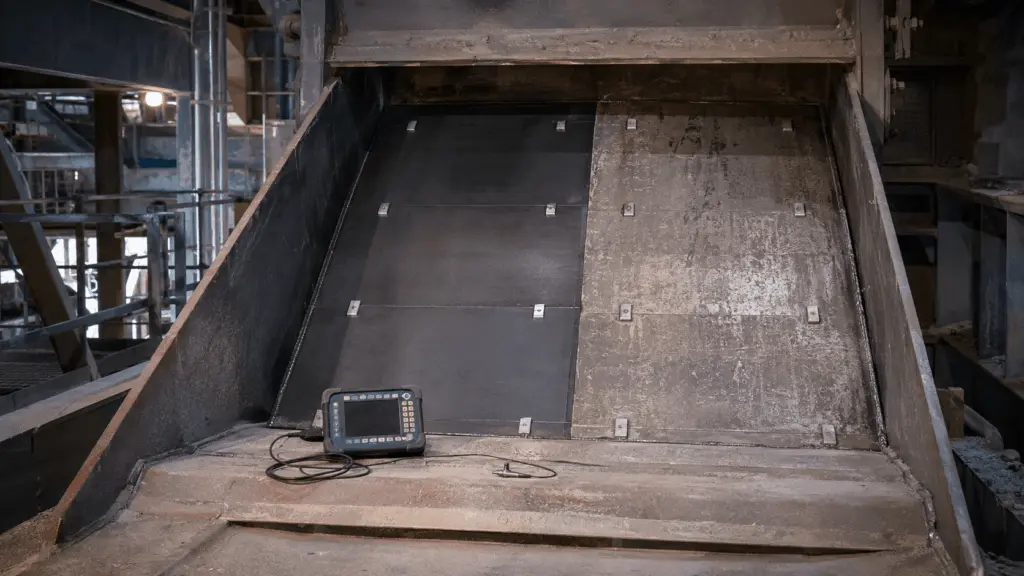
Part 2: 3-step procedure for surveying a wear location
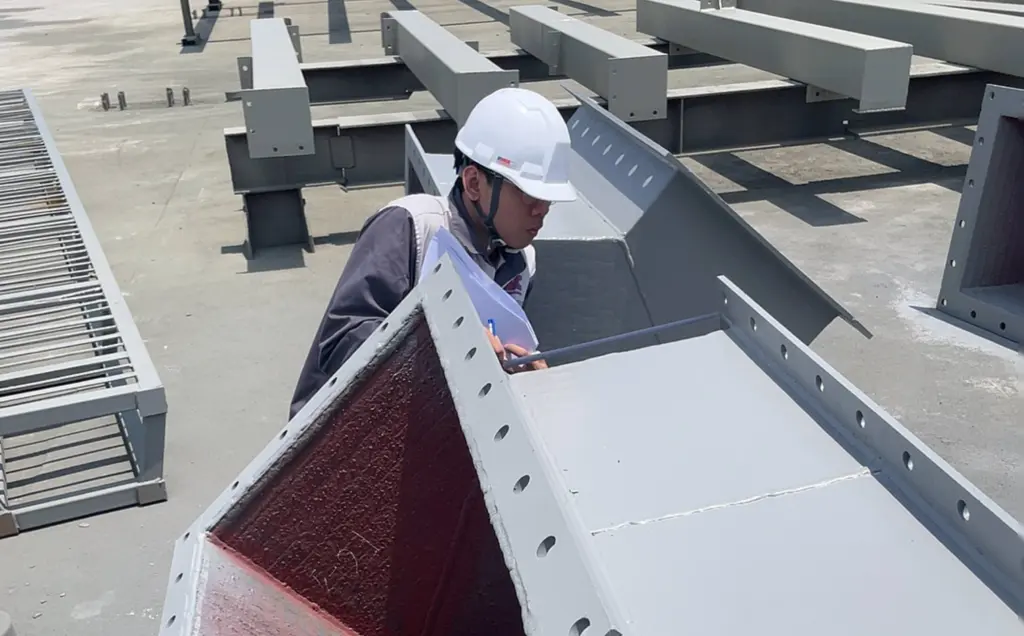
A field survey is valuable only when the information collected is sufficient to clarify three issues: the actual operating conditions at the location, the factor governing the damage, and the solutions that the plant can consider.
Therefore, surveying a location does not stop at taking photographs or recording that “this area wears quickly.” The process needs to begin with the operating conditions, proceed through the diagnostic stage, and conclude with solutions that can be compared in terms of service life, cost, and risk.
1. The process for surveying a location consists of 3 steps
The three steps are carried out continuously from recording the current condition to developing solutions.
Step 1 focuses on collecting actual operating conditions. The method for recording the four groups of factors is presented in Part 1: 4 factors to measure when surveying material wear in an industrial plant.
Step 2 is the part most easily overlooked. A location wearing rapidly is not sufficient grounds to conclude that a material with higher hardness is required. Before making a selection, it is necessary to determine which factor has the primary influence and which factors only contribute to the damage process.
Step 3 converts the survey results into specific options. A solution needs to be considered simultaneously in terms of operating conditions, expected service life, and budget. If any one of these three factors is missing, the solutions do not yet have the same basis for comparison.
2. Preparation before entering the site
Some information can only be obtained while the equipment is operating, while some measurements need to be carried out during equipment downtime. Repair history, seasonal changes, or unplanned shutdowns depend on information from operators and operating logs.
Therefore, preparation needs to begin before the survey date.
2.1. Six items of information to confirm before the survey visit
Before entering the plant, it is necessary to clarify:
- which equipment the damaged location is on and which section of the production line it belongs to
- whether the equipment is expected to be operating or stopped on the survey date
- the safety documentation that needs to be prepared and the completion deadline before entering the area
- whether the person accompanying the survey team at the site directly understands the operating history of the location
- the permitted scope of photography and any restricted areas
- when the location was most recently repaired or replaced
The person accompanying the survey team at the site is particularly important. This person needs to understand the operating history of the location, not merely know the route to the equipment.
If the accompanying person does not know how the location has changed over time, the survey may still obtain photographs and measurements at one point in time but will lack the contextual information needed to explain what happened previously.
2.2. Review the operating log before going to the location
The operating log helps place field measurements in the correct context.
A location that was repaired one week ago and a location that has operated continuously for eight months cannot be evaluated in the same way based only on the surface appearance on the survey date.
The information that should be checked includes the time of the most recent intervention, repair frequency, and unplanned shutdowns. These data help the engineer determine what to focus on at the site and avoid interpreting a measurement separately from the operating history.
3. At the site, prioritize data that change over time
Once the equipment has been accessed, the work sequence should prioritize data that may change or cannot be reproduced in the same condition after the equipment stops.
The general principle is to measure first what changes over time, followed by measurements that can be repeated after the equipment has stopped or under equivalent conditions.
The method for obtaining each measurement and the corresponding instruments are presented in Part 1: 4 factors to measure when surveying material wear in an industrial plant.
3.1. Before leaving the location, recheck three items
Three items that are easily overlooked but directly affect the subsequent usability of the data are:
- the measurement points have been physically marked on the equipment
- photographs include a reference scale within the same frame
- the intervention history and seasonal changes have been discussed with the operator
These items need to be checked immediately at the location. If anything is found to be missing after the equipment area has been left, the survey team may have to wait for another access opportunity before the missing information can be added.
4. Determine which factor is governing the damage
This is the core step of the diagnostic process and also the step that requires the greatest caution.
Determining the governing factor must be based on the actual data from each location. There is no fixed set of criteria that can be applied to every case when wear, temperature, impact, and corrosion occur simultaneously.
Before drawing a conclusion, three points need to be clarified:
The final item serves as a diagnostic verification step. If it has not yet been determined how the current assessment could be incorrect, the conclusion still needs to be stated cautiously.
A technical diagnosis needs to indicate the basis of the conclusion and the limitations of that conclusion, rather than simply presenting a cause that appears plausible.
4.1. When multiple factors act simultaneously
A location may deteriorate faster than expected when multiple mechanisms occur simultaneously.
For example, chemicals may soften the outer layer of the material, after which hard particles continue to remove the weakened layer and expose a new layer. When this process repeats, the deterioration rate may increase more rapidly than when each effect is considered separately.
One indication requiring attention is a location that fails more quickly than initially expected.
Combined damage mechanisms and methods for interpreting damage patterns are discussed in greater detail in the article Material wear mechanisms in industrial plants: 4 types of wear and how to identify them from the marks they leave.
5. Convert the survey results into 2–3 solutions for the plant to select from
Once the operating conditions and priority factor have been identified, the survey results need to be converted into solutions that can be compared side by side.
Each solution should clarify five groups of information:
Do not assume that only one solution should be provided.
GAC can analyze the operating conditions and develop technical options. The plant directly operates the production line, so the final decision needs to balance service life, budget, equipment downtime, and the acceptable level of risk.
6. Operators provide the portion of data that cannot be obtained from a single measurement
Field measurements reflect the condition at the time of the survey. Operators, however, understand how the location changes across multiple shifts, seasons, and repair cycles.
Four items should be discussed:
- intervention frequency and the time of the most recent repair
- seasonal changes in the material and when the most adverse conditions occur
- instances when the production line had to undergo an unplanned shutdown because of this location
- the effect of downtime on production output
Information from operations needs to be considered alongside field measurements. The two sources complement each other; they do not replace each other.
7. When the survey location cannot yet be accessed directly
Not every survey allows immediate access to the location that needs to be measured. The equipment may be operating, access to the area may be restricted, or the appropriate shutdown window may not yet have arrived.
In such cases, some information can still be collected, but the scope of the data needs to be recorded accurately.
Do not infer the remaining thickness from a photograph and record it as a direct measurement.
This recording method allows future users of the survey record to know exactly which parts were measured, which were only observed, and which still require additional data.
8. Field photographs must make it possible to relocate the exact position
Survey photographs are not used only for illustration. When taken correctly, they also help identify the location, extent, and orientation of damage patterns during subsequent inspections.
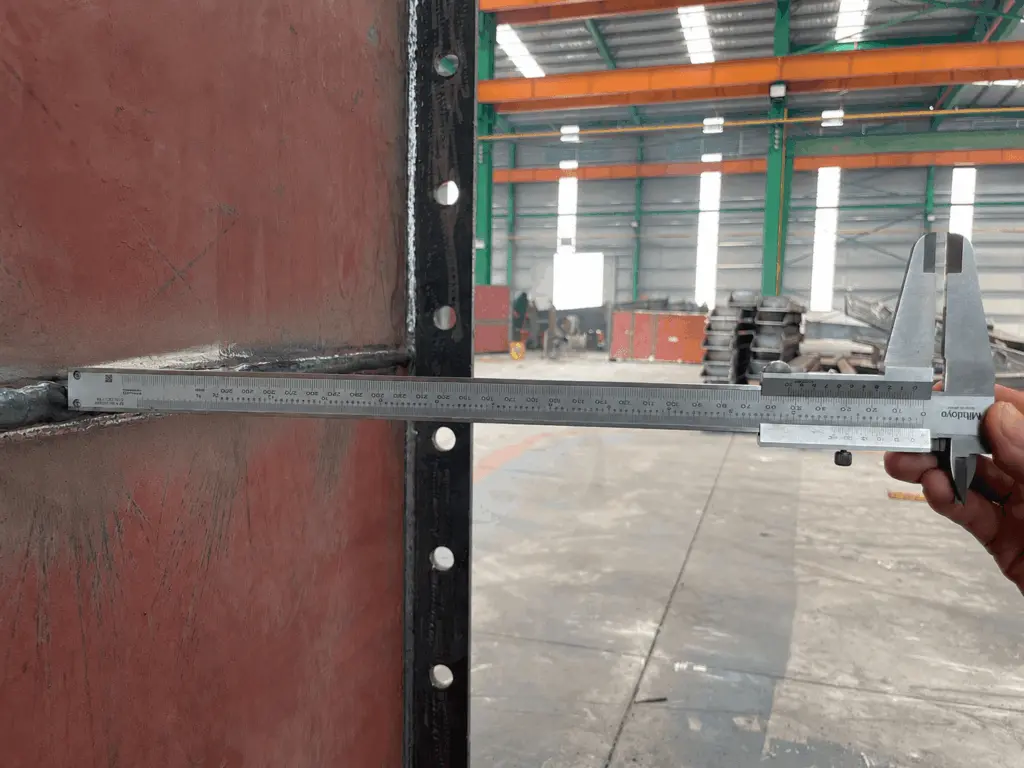
In addition to overview photographs, there needs to be a photograph showing the measurement-point mark within the same frame.
Without this photograph, a subsequent inspection may be able to identify the equipment but still be unable to determine the exact location previously measured.
9. The survey record must be sufficiently clear for future reuse
The survey record is not intended only for the personnel present during the survey. The information needs to be sufficiently clear so that another person reviewing it after a long period can still understand the location measured, the method used, and which data remain missing.
The incomplete-items section is particularly important because it defines the scope within which the survey record can be used and identifies the information that needs to be added before a conclusion is drawn.
10. Responsibilities of the departments within the process
The reliability of the results depends greatly on whether the operating conditions are correctly confirmed. If field input data are recorded incorrectly, the subsequent analysis may still lead to an unsuitable solution.
11. Limitations when applying the survey process
The three-step process helps organize field information into input for the analysis and solution-development stages. However, three limitations need to remain clear.
First, when a factor has not been measured, that status needs to be clearly recorded. Do not infer the missing value from the other three factors.
Second, this process does not replace an actual field survey. The content provides guidance on organizing data and the work sequence; it does not provide a conclusion for a location that has not been inspected.
Third, the four groups of wear, temperature, impact, and corrosion provide the minimum baseline. Some locations may require additional factors depending on the operating conditions.
Determining the governing factor when multiple mechanisms occur simultaneously still needs to be based on the actual data and damage patterns at each location rather than applying a fixed set of criteria to every case.
The three-step process is the method GAC uses to organize a field survey. The value of the process lies in connecting operating conditions, measurements, the history of the location, and the limitations of the data before proceeding to the solution-development stage.