Part 6: Designing a test at a single location
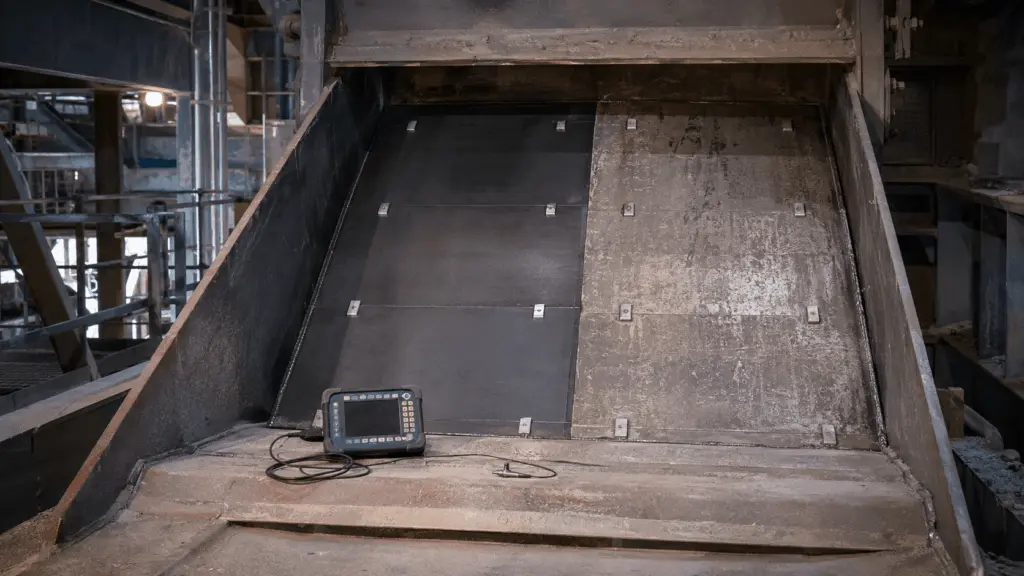
Testing a new material at one location before wider implementation helps the plant reduce the risk associated with changing the solution. However, a trial is only meaningful when the trial location is sufficiently representative, a control location is available, a measurement schedule is established, and stopping criteria are agreed in advance.
If the wrong location is selected or no control location is available, the trial may still generate measurements and records but may not accurately reflect the material’s performance. In that case, the result from one location may be extrapolated to locations with different conditions, increasing the risk when the solution is implemented on a larger scale.
1. A trial requires a control location, monitoring cycle, and stopping criteria
The three components that determine whether a trial has a sufficient basis for evaluation are:
When these three factors are defined in advance, both favorable and unfavorable results have value.
A trial without a control location only produces results for the trial location itself. A favorable result may come from the new material, but it may also result from a lighter operating load, a change in the material being handled, or the trial location receiving more frequent inspection and attention during the monitoring period.
Therefore, the control location helps separate the effect of the material from the effect of the trial conditions.
2. The trial location must be representative of the group of locations to which the result is intended to be applied
The trial location should not be selected solely because it is the most severely damaged or the easiest to access.
A more suitable location is one with conditions similar to those of the majority of comparable locations in the production line.
Wear, temperature, impact, and corrosion can be compared between the proposed trial location and equivalent locations. When these four groups of factors are under similar conditions, the trial result has a stronger basis for application to similar locations.
3. The control location needs to be equivalent to the trial location
The control location is where the existing material is retained throughout the trial period for comparison with the location using the new material.
In practice, it is difficult to find two completely identical locations. Therefore, the degree of equivalence needs to be evaluated using four criteria:
If one criterion is not equivalent, it is necessary to clearly record which criterion differs and the extent of the difference.
This does not eliminate the value of the trial entirely, but it helps the reader understand the scope within which the result can be used and avoids treating the two locations as fully equivalent when they are not.
4. The trial location and control location must be measured at the same time
At least three measurement milestones are required:
- M0: immediately after installation
- M1: after the first operating cycle
- M2: after the second operating cycle
M0 establishes the initial reference point for the new material. M1 provides the first data on wear rate. M2 allows the wear trend to begin to be observed.
The important point is that the trial location and control location must be measured at the same time. If the two locations are measured at different times, operating conditions may have changed, reducing the value of the comparison.
The method for establishing measurement milestones and calculating wear rate is presented in Part 4: Measuring wear rate and establishing a baseline.
5. Stopping criteria must include both unfavorable results and unusually favorable results
Stopping criteria are not used only when the trial material performs poorly.
An unusually favorable result also needs to be checked before it is used to draw a conclusion or support wider implementation.
The third case is particularly important. If a favorable result occurs during a period of lighter load, a different material type, or lower-than-normal temperature conditions, applying that result to other locations may create inappropriate expectations.
6. Not every crack is a reason to stop the trial
The type of cracking needs to be identified before deciding whether to continue or stop the trial.
For some carbide-rich hardfacing overlays, small, regular cracks running across the weld bead may occur within the overlay to relieve shrinkage stress. Therefore, the stopping criterion should not simply state “cracking occurs”.
The trial record needs to describe the specific crack type or damage mode rather than using only the general criterion “cracking is present.”
7. The trial record must be agreed before the material enters service
The trial design needs to be completed before the new material is put into service.
The record needs to clearly define the trial and control locations, the operating conditions at both locations, the degree of equivalence between them, the materials used, the measurement schedule, stopping criteria, and the responsibilities of the parties.
The required content includes:
- trial location and control location
- the four groups of influencing factors at both locations
- control criteria that are not equivalent and the degree of difference
- trial material and the material retained at the control location
- M0, M1, and M2 milestones together with the expected timing
- stopping or reassessment criteria
- the person taking the measurements, the person confirming the measurement method, and the person confirming the results
- operating conditions throughout the trial period
Operating conditions need to be recorded throughout the trial because they provide the basis for verification when results are unusually favorable or unfavorable.
8. Results should only be applied to locations with equivalent conditions
A trial at one location has a specific scope of conclusion.
A favorable result at one location does not mean that the material will produce the same result at every other location in the plant.
The scope of application needs to be determined according to the degree of equivalence of the operating conditions, not merely according to the equipment name or material name.
9. At least two operating cycles and three measurement milestones are required
Under this monitoring method, the trial requires at least two operating cycles and three milestones: M0, M1, and M2.
An initial assessment can be made after one cycle, but that result needs to be understood as a preliminary conclusion.
The wear rate is not necessarily linear. One cycle is also insufficient to exclude the influence of short-term variations such as changes in the material handled, operating load, or seasonal conditions.
10. Three changes can reduce the comparative value of the trial
During monitoring, it needs to be recorded if:
- the control location is subject to intervention during the trial period
- operating conditions change significantly, such as material type, capacity, or temperature
- the trial location is inspected, cleaned, or operated differently from normal locations
These changes do not automatically invalidate the entire trial. However, they must be recorded so that the results can be interpreted correctly within the actual context.
Particularly for the control location, if the equipment fails during operation, the plant still needs to intervene. In that case, the intervention date, cause, and work performed need to be clearly recorded so that the trial can continue to be monitored on the new basis.
11. Responsibilities of the departments within the process
Trial design requires coordination between survey engineering, operations, and the parties directly monitoring the results.
The control location may require intervention if an operational issue arises. Therefore, the record needs to define in advance how such a case will be documented rather than assuming that the control location will remain unchanged throughout the entire trial period.
12. Notes when designing a trial at a location
Four points need to remain clear.
First, results from one location should not be automatically extrapolated to locations with different operating conditions.
Second, in practice, the control location is unlikely to be completely identical to the trial location. The degree of equivalence needs to be evaluated using the defined criteria, and the remaining differences need to be clearly recorded.
Third, a conclusion after one cycle should only be regarded as a preliminary conclusion. At least two operating cycles are required to begin observing a trend and reduce the influence of short-term variations.
Fourth, unusually favorable results also need to be rechecked. A trial period with lighter-than-normal conditions may cause the material’s performance to be evaluated more favorably than under actual wider implementation.
The design of the control location and the method of establishing stopping criteria in both directions are methods used by GAC when organizing field trials and are not a general procedure applied identically to every case.
A trial is valuable not simply because the new material produces a favorable result. Its value lies in the result being generated at a sufficiently representative location, compared with a control under the same conditions, and monitored according to criteria agreed before the trial begins.