Part 7: Roadmap for mechanism diagnostics and on-site assessment implementation

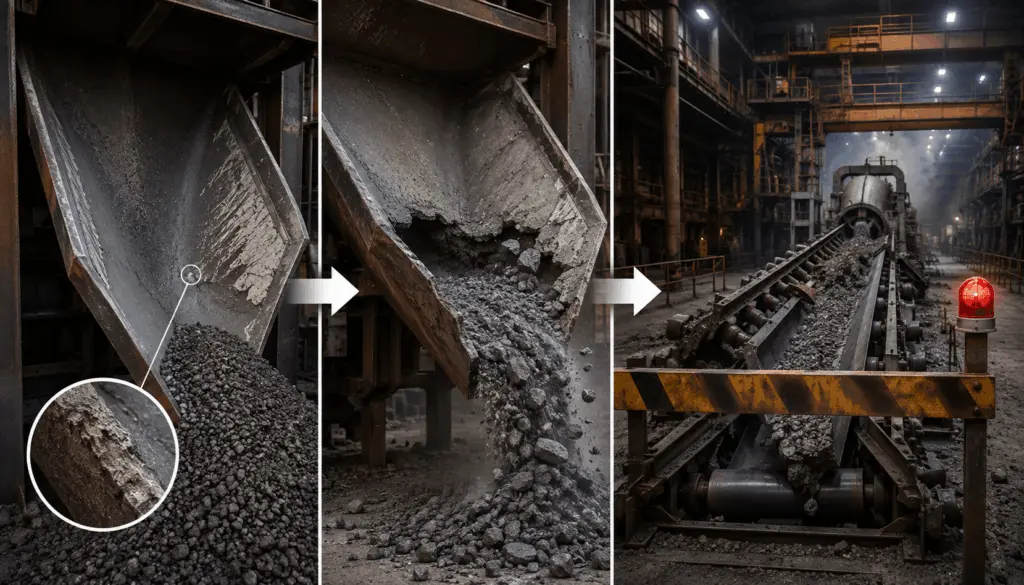
If the previous 6 articles respectively progressed from identifying wear types, the effects of temperature, material sticking and flow blockage, to wear-location mapping and the chain of operational consequences, this section addresses the corrective roadmap based on the actual condition of each location.
The general sequence consists of three steps: identify the mechanism → measure the actual conditions → select the material group. Correctly identifying the mechanism indicates what needs to be checked; field measurements indicate the severity of the action; only then is there sufficient basis to evaluate material options.
1. The next step depends on the condition of the location
Not every case needs to begin with a full survey. The first step is to determine where the plant currently stands in the diagnostic process.
1.1. When there is a clearly damaged location
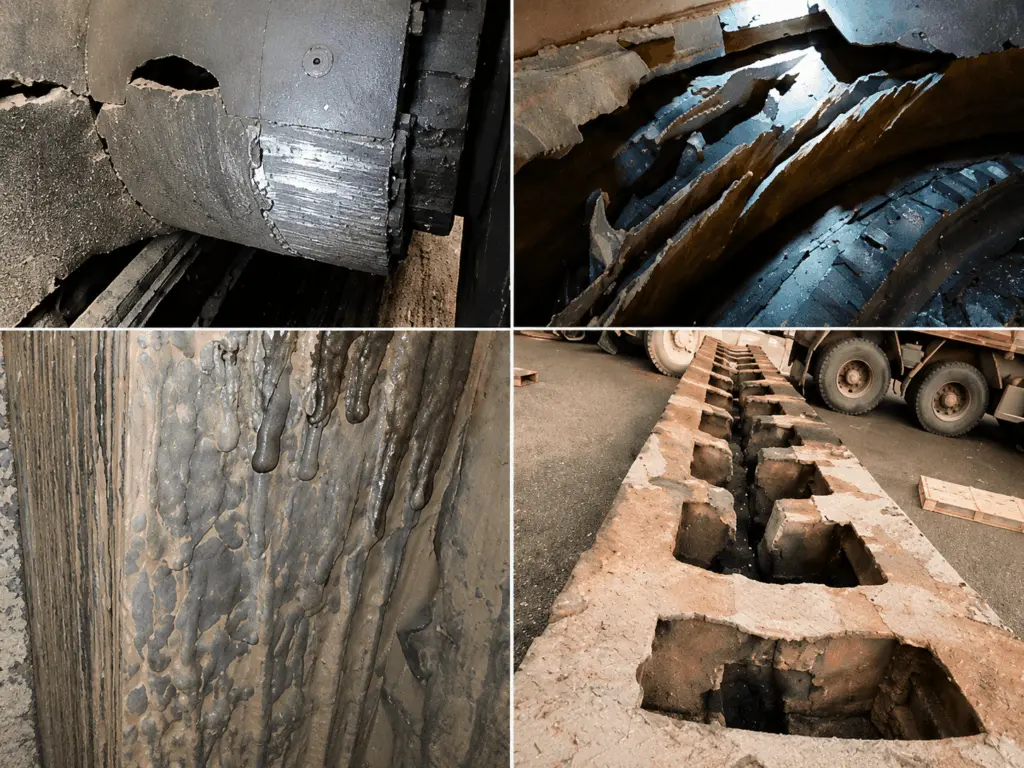
If the equipment currently has a deteriorating location, the starting point is to observe directly at the damaged area, not the name of the existing material or the material being considered as a replacement.
The sequence can be carried out as follows:
The final step is particularly important. If the actual cause lies in the fastening point or material-flow geometry, replacing the lining with a new one may still result in repeated failure even if the material itself is suitable for the wear conditions.
1.2. When the material has already been replaced but the location continues to fail repeatedly
A lack of service-life improvement after replacing the lining is not sufficient to conclude that the new material is still “not good enough.”
Before changing to another option, two possibilities need to be rechecked:
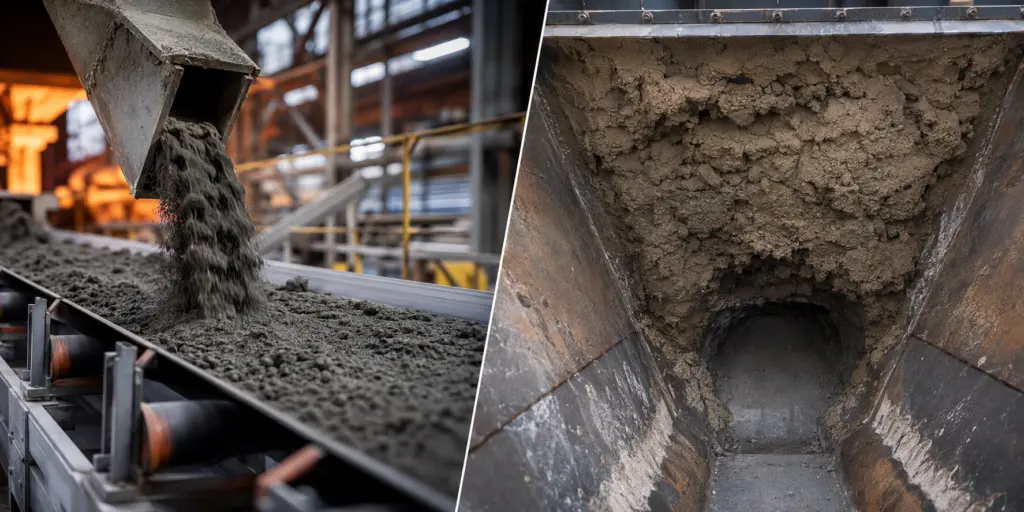
If material is building up on the wall, the problem shifts to material flow and sticking.
If cracking or detachment is concentrated around welds, bolts, or fastening locations, the fastening conditions, temperature, and vibration need to be checked before concluding that the cause lies in the lining.
1.3. When the economic impact of a location needs to be evaluated
If the objective is not only technical identification but also determining the level of impact on operations, at least four data points need to be collected:
- Frequency of intervention at the location
- Number of downtime hours for each intervention
- Whether the damage stops only one item of equipment or affects the entire line
- Production value relative to the operating time of the line
The third data point can significantly change the level of priority. A location that causes only a local shutdown and a location that forces the entire line to stop are two different problems even if they require the same repair duration.
The method for tracking the full chain of impacts is presented in Part 6: Technical and operational consequence chain from a wear point.
2. The starting point may differ by department
Not every role in the plant needs to read all seven parts in the same order. The starting point should follow the question that each department needs to resolve.
Personnel working directly at the plant can begin with the specific problem they are facing and return to the foundational sections when cross-checking is required.
3. Three actions can be taken before organizing a dedicated survey
Some initial data can be collected using the tools and information already available at the plant. The objective is to narrow down the scope of the problem before deciding on the required level of survey.
3.1. Record damage patterns at the actual damaged location
Begin with the area deteriorating most rapidly and record:
- shape of the damage marks
- orientation of the marks
- material-flow direction
- extent of the damage
- photographs with a reference scale where conditions permit
The method for interpreting and distinguishing damage patterns is presented in Part 1: 4 types of wear and their identifying signs on the surface.
If the surface has already been ground or weld-repaired, this condition needs to be clearly recorded because part of the original damage pattern may have been lost.
3.2. Record both operating temperature and peak temperature
A temperature measurement under steady-state conditions does not represent the full operating conditions.
At a minimum, the following need to be determined:
The detailed evaluation method is presented in Part 2: Effects of temperature on the operating limits of materials.
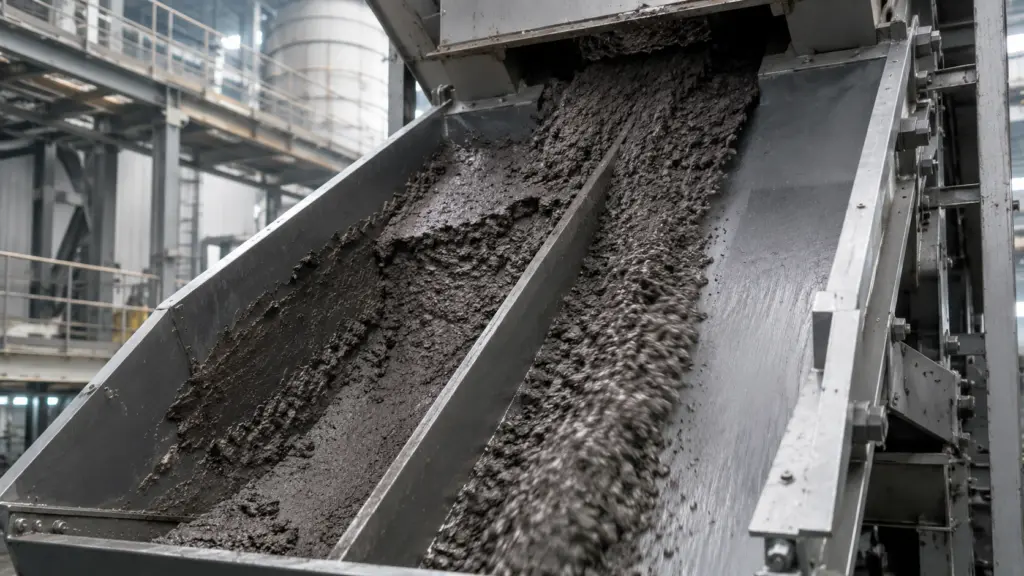
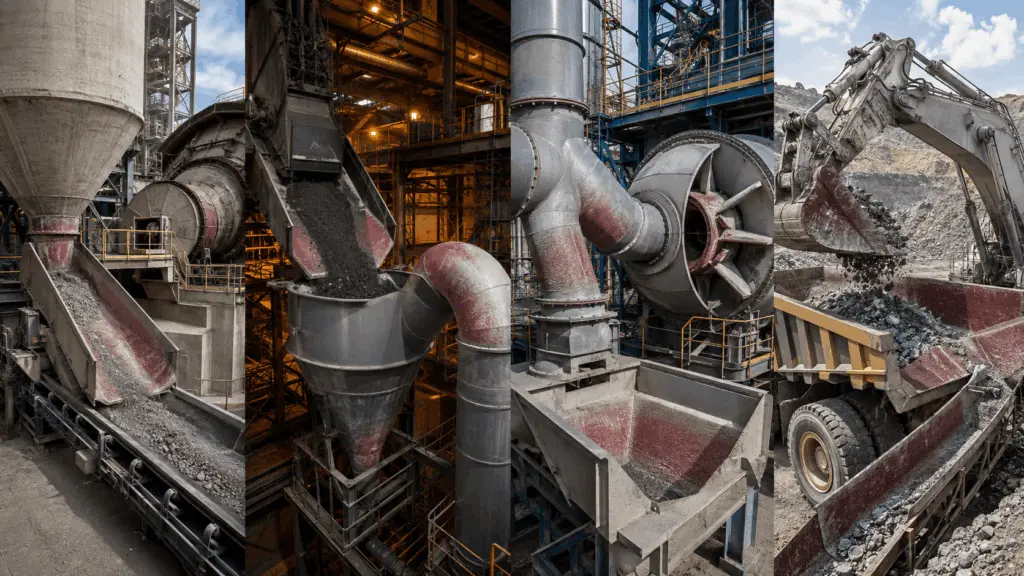
3.3. Follow the material flow to narrow down the locations requiring inspection
Instead of starting from an equipment list, the material flow can be followed from inlet to outlet and the following can be marked:
- locations where the flow changes direction
- locations where the cross-section or velocity changes
- locations where the flow transitions from falling to sliding
- locations where the material condition changes
- locations where multiple adverse conditions occur simultaneously
The method for developing the map and identifying priority locations is presented in Part 5: Wear-location map by industry and equipment.
The required result is a list of locations that need to be monitored on the specific production line being considered, not a general list applied to the entire industry.
4. Conduct a more detailed technical survey when the available data are insufficient for a conclusion
A technical survey should generate data that can continue to be used, rather than ending only with a material recommendation.
The outputs to be targeted include:
Four situations in which a more detailed survey should be considered include:
- the surface has been patched or ground, so the original damage patterns are no longer complete
- multiple mechanisms are suspected to be acting simultaneously
- the lining has already been replaced two or more times but the condition continues to recur
- a baseline needs to be established before a major change in material or solution
A survey result that contains only a material recommendation but does not retain the measurement locations, operating conditions, and initial data will be very difficult to use for evaluating effectiveness later.
5. Some cases do not yet require a dedicated survey
Not every location immediately requires an in-depth survey.
Particularly for material-flow problems, if the cause lies in the wall angle or cross-section, changing the material may only change the timing of blockage occurrence without addressing the primary cause.
Identifying cases that do not yet require deeper intervention helps the plant focus resources on locations that are directly affecting operations.
6. From mechanism identification to material-group selection
After the mechanism has been identified, two steps still remain before reaching a material option: measure the severity of the action and compare the operating conditions with the capabilities of each material group.
Surface damage patterns may indicate which mechanism is suspected, but they do not show the wear rate, peak temperature, particle size, impact load, or the level of the current material-flow condition.
These data need to be measured before material options are compared.
7. Notes when applying this knowledge
First, the roadmap in this article helps determine the sequence of work; it does not replace data from each location. The same type of damage pattern under different operating conditions may still result in different levels of damage.
Second, the reading sequence by role is only a guide. One person may simultaneously be responsible for engineering, maintenance, or operations and may need to use multiple content groups.
Third, the cases that do not yet require a dedicated survey are not an absolute list. The final decision still depends on the impact of the location on operations and the completeness of the currently available data.
The appropriate roadmap begins with the mechanism, continues with measurements, and only moves to material-group selection when the operating conditions are sufficiently clear. Maintaining this sequence helps avoid repeated material changes while the actual cause has not yet been identified, while also creating data that can be used to verify the effectiveness of the solution after implementation.