Part 5: Acceptance criteria and responsibility for material selection
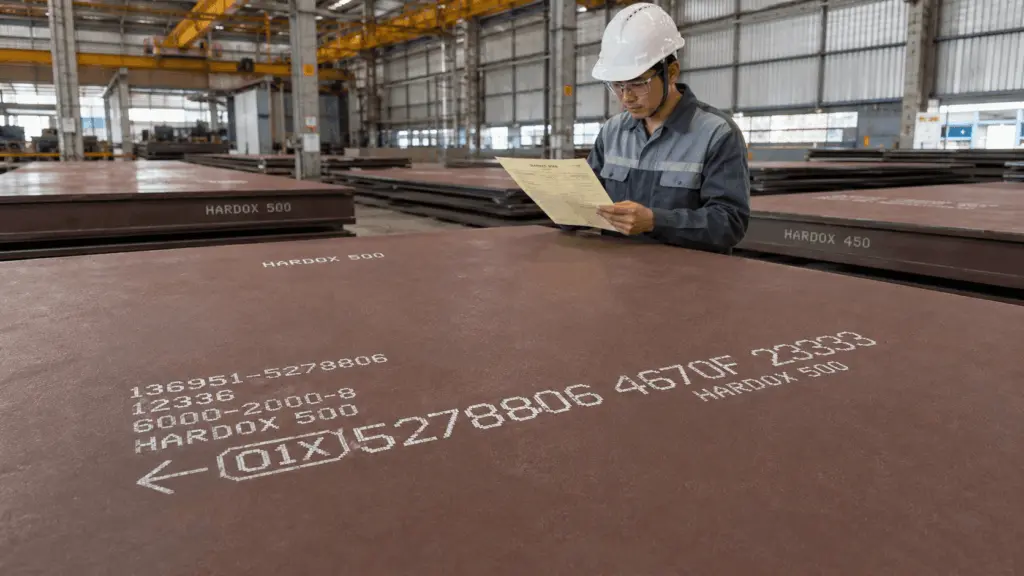
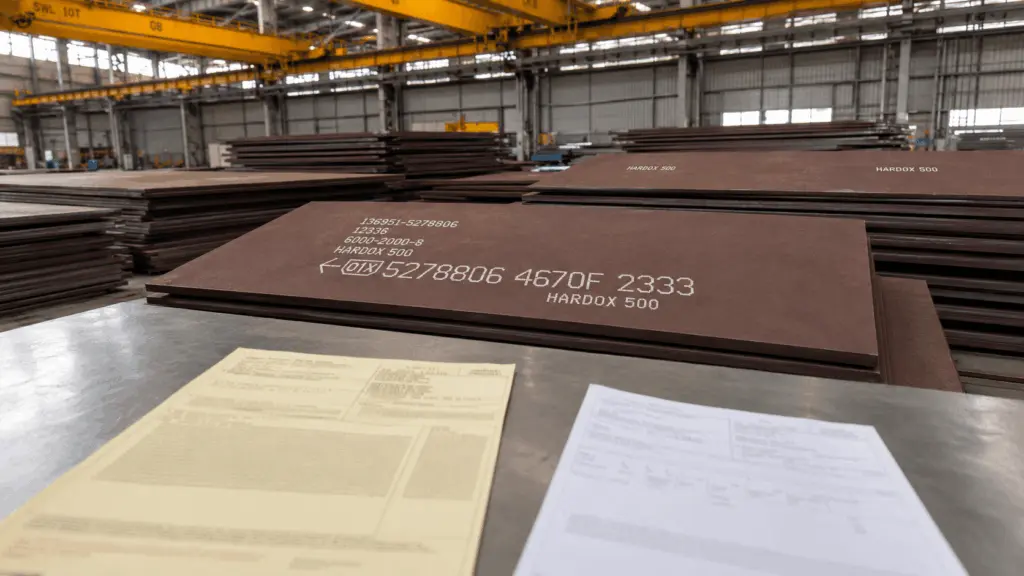
A material batch may fully comply with the properties stated on its certificate and may be machined and installed according to the correct procedure, yet still deteriorate prematurely after being put into operation.
In this situation, it is necessary to distinguish whether the cause lies in material quality, the material selection decision or the installation process. These are three different areas of responsibility, each requiring different technical evidence.
If these responsibilities are not defined from the beginning, the manufacturer may demonstrate that the material complies with its declared properties, and the installation contractor may confirm that the correct procedure was followed, while the plant still lacks sufficient basis to determine whether the selected material was suitable for the actual operating conditions at that position.
For this reason, a material solution needs clear acceptance criteria, an identified function responsible for material selection, and data for evaluating the result after installation.
1. Distinguishing three areas of responsibility when using materials
When evaluating a material solution, responsibility for material quality, suitability for the application, and fabrication and installation needs to be considered separately.
These three areas are related, but they do not replace one another.
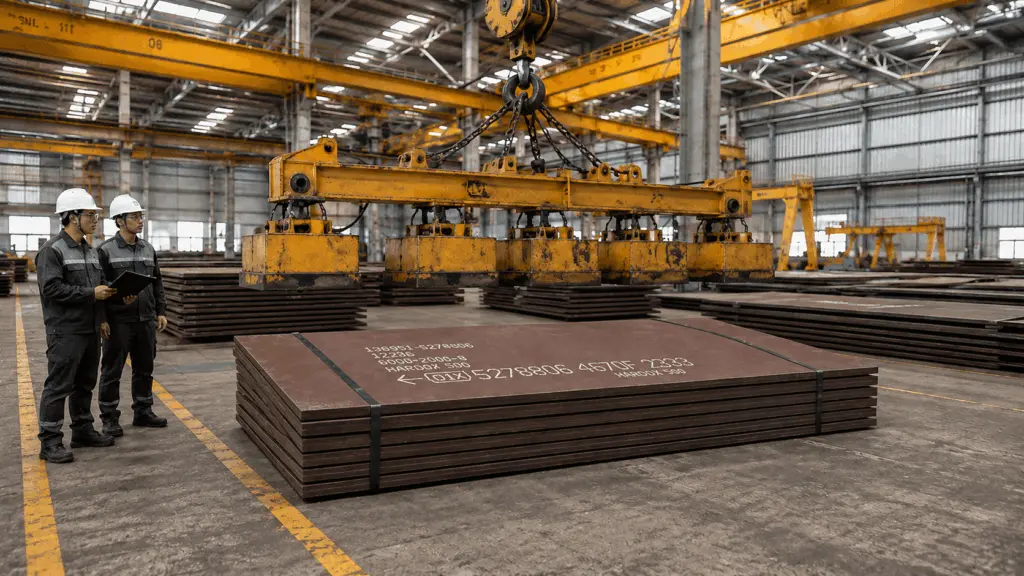
For example, a wear-resistant steel plate may be delivered with the correct grade and declared hardness. After installation in a transfer chute, however, the plate may deteriorate faster than expected.
To determine the cause, the following need to be checked separately:
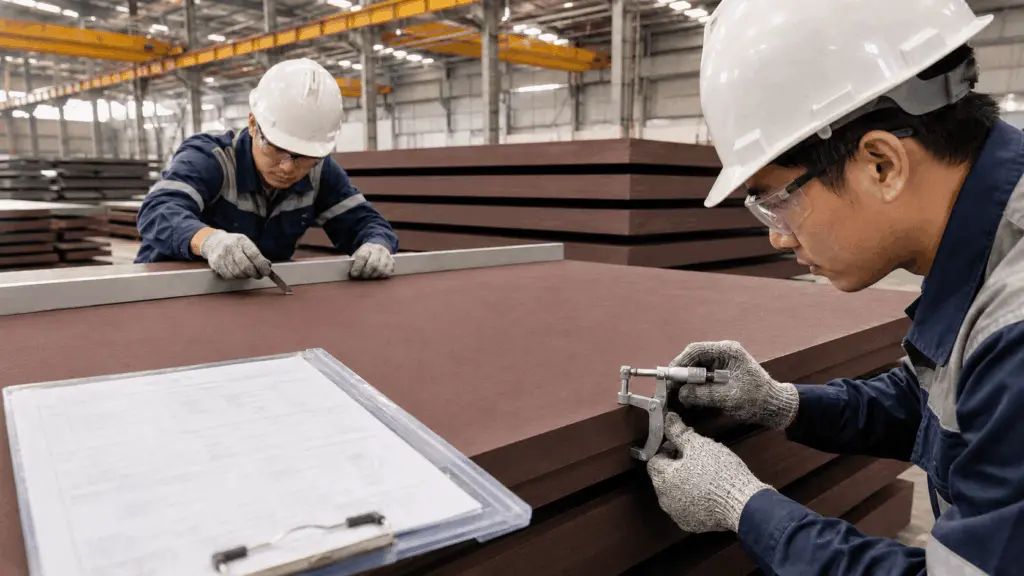
- Material quality: Do the actual properties comply with the ordered requirements?
- Material selection: Are the wear mechanism and operating conditions suitable for the selected material group?
- Fabrication and installation: Did fabrication, fixing or installation affect the material’s ability to perform?
Defining the correct area of responsibility helps keep failure assessment focused on the relevant evidence rather than treating every problem as a material quality issue.
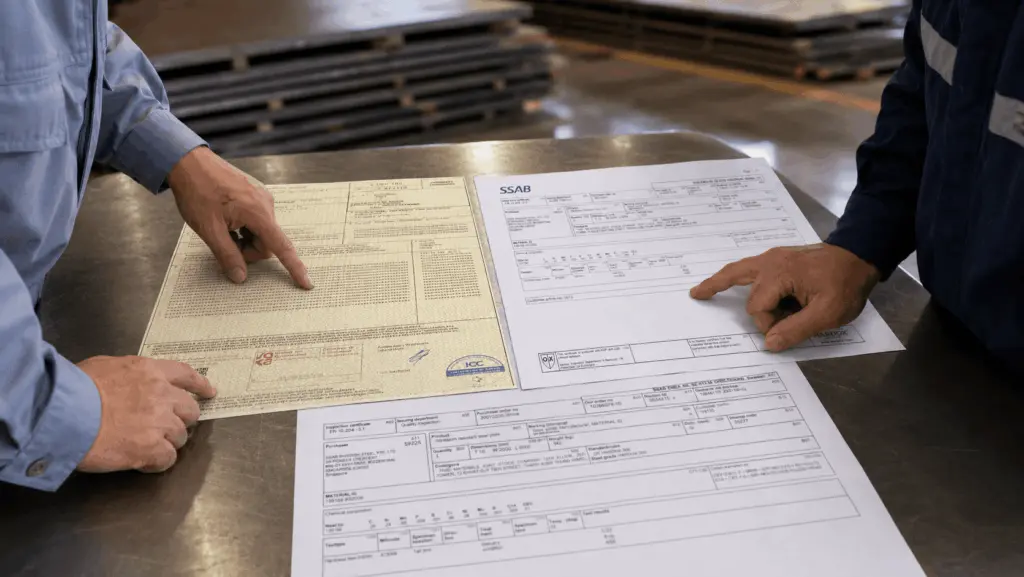
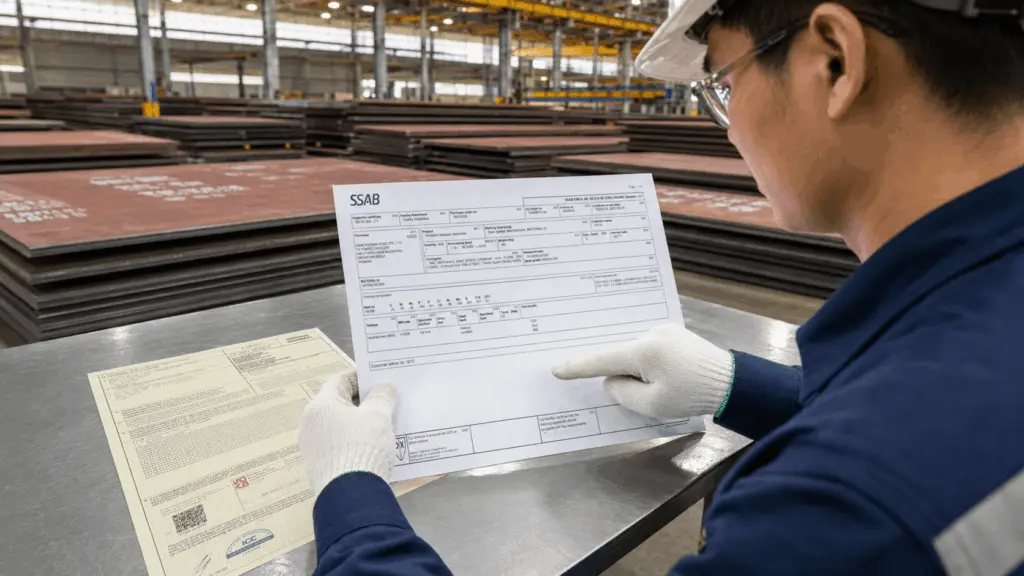
An inspection certificate confirms material quality within its declared scope, while suitability for a specific operating position needs to be demonstrated using technical data from that position.
Further details on the scope of information confirmed by certificates are provided in Part 1: What do material certificates and documents prove.
2. Why does an inspection certificate not replace responsibility for material selection?
Manufacturer technical documentation typically provides information on product composition, properties and intended application range.
However, actual operating conditions in a plant are also affected by factors such as wear mechanism, temperature, impact, corrosion, equipment geometry and installation method.
A material that fully complies with its declared properties is therefore not necessarily suitable for every operating position.
2.1. Limits of manufacturer information
Technical documentation helps the technical team understand the characteristics of a material and the conditions that need to be considered when using it.
However, this information is generally developed for a defined product scope and specified conditions. It is not a guarantee that the material will achieve the same result in every plant.
For example, a high-hardness steel plate may be suitable for a certain type of wear but may not necessarily be the appropriate choice when the component is also exposed to severe impact or other effects.
Manufacturer data therefore needs to be considered together with survey results from the actual operating position.
2.2. Responsibility for material selection needs to be documented
If the records contain only the material certificate and installation documentation, a later review may lack the information needed to explain the original selection decision.
To address this, a technical function needs to be assigned responsibility for evaluating and proposing the material solution.
The selection record needs to state clearly:
- operating conditions recorded at the position
- material options that were considered
- basis for selecting the final option
- responsible function and person approving the decision
- limitations or remaining risks that could not be eliminated
This allows the selection decision to be reviewed later using recorded data rather than relying only on judgments made after a failure occurs.
3. Four steps for establishing responsibility for material selection
To ensure that a material solution has sufficient technical basis and can be reviewed after use, the selection process should be organized into four steps.
3.1. Collect sufficient operating-condition data before selection
The first step is to record the main effects at the operating position:
Wear – Temperature – Impact – Corrosion.
Depending on the equipment, the survey may also need to consider component geometry, material flow conditions, machinability, installation requirements and maintenance conditions.
Conclusions need to be based on measurable data or observable field evidence.
For example, if a position shows signs of rapid wear, the wear mechanism should be identified before proposing a higher-hardness material.
3.2. Document the basis for selection and alternative options
A proposal record needs to show the conditions on which the selected solution was based.
If several material groups were considered, the reasons for accepting or excluding each option should also be recorded.
This helps the technical team explain why a particular material was selected at that time, even if operating conditions change later.
3.3. Confirm the responsible function
The record needs to identify the function responsible for the selection, the approving person and the date of approval.
This information helps trace technical responsibility and the decision-making process. Recording the name of the approving person does not automatically establish personal legal liability beyond the assigned or agreed scope.
3.4. Verify the result after installation
A material solution can only be fully evaluated when actual operating data is available.
A baseline should therefore be established before material replacement, together with a plan for follow-up measurements after installation.
For example, if the objective is to reduce wear rate, data on the previous condition or wear rate is needed so that the performance of the new material can be compared.
Without baseline data, it will be difficult for the plant to determine the actual level of improvement.
A properly supported material selection decision needs to explain why the material was selected and allow the result to be verified after it is put into operation.
4. What information should an acceptance criterion define?
Not every property or requirement stated in a document provides sufficient basis to be used as an acceptance criterion.
Under Gia Anh’s documentation framework, each criterion should be considered against five elements.
For quantitative criteria, the value and unit need to be clearly defined.
For qualitative requirements, such as surface condition, the acceptable condition and the corresponding evaluation method need to be described clearly.
These five elements provide a framework for organizing acceptance criteria. They are not a mandatory template prescribed for every material group.
4.1. Distinguishing guaranteed values from typical values
A property shown in a technical data table is not necessarily guaranteed by the manufacturer.
If a property is declared as a typical value, the quality department should not automatically use it as a mandatory acceptance limit.
Similarly, a value converted from another measurement needs to be distinguished from a directly measured test result.
Before including a property in the acceptance criteria, its declaration level and the conditions agreed with the supplier need to be checked.
4.2. The inspection method needs to match the property being evaluated
The same material property may be evaluated using different methods.
For example, Brinell and Rockwell hardness are determined using different methods and measurement scales. The two values should not be compared directly without establishing an appropriate basis.
When an acceptance criterion specifies a particular method, the applicable standard and test conditions need to be stated clearly.
Further details are provided in Part 2: Test methods and material quality inspection.
5. Acceptance criteria need to be appropriate for each material group
A criterion suitable for structural steel may not necessarily be applicable to a hardfacing layer, ceramics or other non-metallic materials.
This is particularly important when accepting solutions that combine several material groups.
Example: Cracking in a wear-resistant hardfacing layer
For many structural steel components, cracking may indicate non-compliance and needs to be evaluated against the applicable technical requirements.
However, in some carbide-rich wear-resistant hardfacing layers, small cracks with relatively uniform distribution and running transverse to the weld bead may form during cooling.
These cracks may help relieve shrinkage stresses in the hardfacing layer and may be an accepted feature of the product design.
If a criterion such as “the surface must be free from cracks” is taken directly from structural steel requirements and applied to this type of hardfacing layer, the acceptance result may not reflect the actual characteristics of the material.
However, this does not mean that every crack in a hardfacing layer is acceptable.
The following need to be distinguished:
This example shows that acceptance criteria need to be developed according to the actual nature and application scope of the material.
A criterion may be strictly worded but still lead to an incorrect acceptance decision if it does not match the product characteristics.
6. What information should be included in the acceptance records for an operating position?
For positions where wear-resistant materials are replaced or structures are modified, the records should be organized by operating position.
This approach links survey results, the material selection decision, material documentation and post-installation operating data.
Under Gia Anh’s process, the documentation should be considered in seven groups.
Among these seven groups, the reason for material selection needs to be recorded clearly.
A solution may be appropriate at the time of the survey but become unsuitable if operating conditions change.
If the records contain only the name of the selected material without the basis for selection, the technical team will have difficulty identifying the reason when actual performance differs from expectations.
Similarly, material documentation needs to be linked to the actual component installed. When a material plate is cut into multiple sections, identification information needs to be maintained in the fabrication records.
Further details are provided in Part 4: Traceability and identification of material from an incorrect source.
7. Records need sufficient data to review the decision years later
Acceptance records are not only used for handover when the work is completed.
After several years of operation, the plant may need to review the material solution when damage occurs or when preparing for another replacement.
At that point, the records should be able to answer six questions:
7.1. Retain the options that were not selected
Recording the options considered helps the technical team determine whether the selected solution was appropriate for the requirements and conditions at that time.
For example, if a lower-cost option was considered but rejected because it did not meet the impact conditions, that reason needs to be recorded clearly.
After a period of operation, the plant may use new data to reassess options that were previously rejected.
7.2. Record the remaining risks of the selected solution
Not every factor affecting material service life can be determined precisely at the time of the survey.
Some operating conditions may vary, or sufficient measurement data may not yet be available.
These limitations need to be documented in the selection record.
For example, if the survey data represents operating conditions only at a particular point in time, the report should state the scope of the assessment and any changes that may affect operating performance.
Recording remaining risks helps the plant understand the limits of the technical decision and provides a basis for evaluation when actual conditions change.
8. Three situations where there is insufficient basis to guarantee material suitability
Responsibility for material selection needs to reflect the ability to collect data and verify the result.
Under Gia Anh’s assessment framework, three situations need to be clarified before a material solution is confirmed.
8.1. No operating data is available
If the operating conditions have not been identified, the technical team lacks sufficient basis for material selection.
In this case, additional survey work should be carried out or the limitations of the proposed solution should be clarified before approval.
8.2. Post-installation measurements cannot be performed
Without a monitoring plan, the plant will have difficulty determining the result after the material is replaced.
The records may confirm that the material and installation process met the requirements at the time of acceptance inspection, but there will not be sufficient data to conclude on long-term operating performance.
8.3. Service-life commitment is not linked to operating conditions
Material service life depends on the operating conditions at the position where it is used.
A service-life commitment therefore needs to define the applicable conditions and the basis for evaluation.
Without this information, the technical team does not have sufficient basis to provide an absolute commitment.
The limits of any commitment need to be defined according to measurable data and verifiable results.
9. Three common errors when preparing acceptance inspection records
Of these, using a typical value as a mandatory requirement may only become apparent when a dispute occurs.
A property published for reference does not automatically become a value guaranteed by the manufacturer.
Before approving the acceptance criteria, the quality department therefore needs to check the declaration level of each property and compare it with the agreed conditions.
10. Responsibilities of the different functions
To manage the selection and acceptance inspection process properly, responsibilities need to be divided by stage.
Throughout this process, responsibility for material selection needs to be clearly identified in the records and assigned to an approving person.
Signatures and approval information allow the technical decision to be traced, while survey data and post-installation measurement results provide the basis for evaluating whether the selected solution was appropriate.
11. Notes on applying this knowledge
First, the division of responsibility between material quality, material selection and installation is a technical assessment framework. It does not by itself determine the legal liability of the parties. Contractual responsibilities need to be considered separately.
Second, the four-step process for establishing material selection responsibility and the seven documentation groups are part of Gia Anh’s work organization approach. They support technical decision management but do not replace standard requirements or manufacturer commitments.
Third, the five elements of an acceptance criterion provide a framework for developing verifiable requirements. Specific acceptance criteria need to be appropriate for the material group, test method and agreed conditions.
Fourth, crack characteristics accepted in certain wear-resistant hardfacing layers cannot be applied generally to all products. The technical documentation and acceptance criteria for the specific material group need to be checked.
Fifth, guaranteed values, typical values and converted values have different uses. Before including any value in acceptance criteria, its declaration level and test basis need to be verified.
Sixth, acceptance inspection data recorded at handover does not replace operating-performance monitoring. Evaluating service life and performance after material replacement requires a baseline and actual measurements over time.
A technically supported material solution needs to identify why the material was selected, which acceptance criteria it needs to meet, which function is responsible, and how its operating performance will be verified.
When this information is recorded properly, the plant can review the material selection decision, identify the cause of deviations and develop more appropriate solutions for future material replacements.