Part 3: Metallic, non-metallic and monolithic linings: selection based on geometry and installation
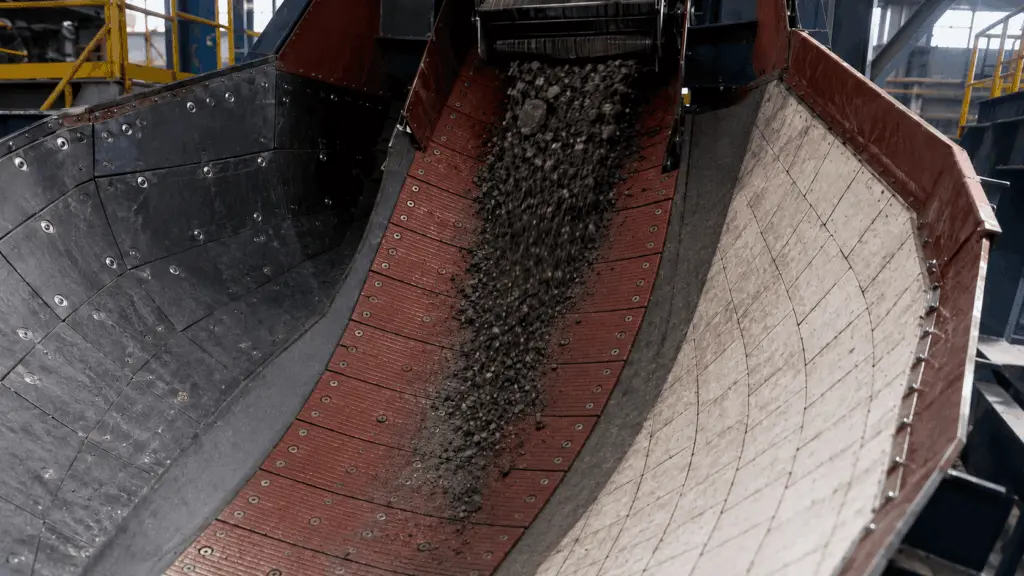
Once a technically suitable material group has been identified, one important question remains: is that material group actually compatible with the equipment geometry, fixing method and available downtime?
Metallic materials, non-metallic materials, monolithic linings and engineering plastics differ not only in their mechanical properties. They also differ in how they are fixed, repaired and how they fail.
This is particularly important for locations that can only be accessed during scheduled downtime. A solution may provide suitable wear resistance but still be impractical if it is difficult to install, requires a long curing time, or has a sudden failure mode that the plant cannot accept between maintenance periods.
1. Each material group has its own suitable application range and installation limitations
When selecting a lining, the materials can be divided into three main groups:
- metallic materials
- non-metallic materials
- Ultra-high-molecular-weight polyethylene (PE-UHMW)
In this article, Ultra-high-molecular-weight polyethylene (PE-UHMW), referred to as Anti-adhesion Plastic, is used for applications where material sticking and flow blockage are the primary concerns.
In terms of material classification, monolithic hard-compound linings belong to the non-metallic group. However, they are listed separately because their installation methods differ significantly from those used for wear-resistant ceramics and fused cast basalt.
Therefore, once the material options have been narrowed down according to the operating conditions, the next question should be:
How will the material actually be installed on the equipment?
2. The fixing method can determine the service life of the entire lining
Metallic materials can be welded directly to the supporting structure.
Non-metallic materials cannot be fixed in the same way. Depending on the material system, the lining may be secured using:
- adhesive bonding
- bolts
- welded steel rings
- retaining mesh systems
- other suitable fixing arrangements specified by the lining system design
In practice, there are cases where the lining material still has remaining wear resistance, but the attachment fails first.
In such cases, replacing the lining while retaining an unsuitable fixing method may cause detachment or lining loss to occur again.
A solution is therefore only complete when both the material and its fixing method are suitable for the operating conditions at that location.
3. Equipment geometry can eliminate a material group before a specific grade is selected
Surface geometry directly affects fabrication and installation feasibility.
This shows that being mechanically suitable does not automatically mean being geometrically suitable.
A material group may meet the requirements for abrasion, temperature and impact, yet still be ruled out because it cannot be formed or installed appropriately on the actual equipment.
4. The fixing method should be checked before the solution is finalized
Each fixing method has its own application requirements.
If a fixing method cannot be implemented at the actual location, it may eliminate the entire material solution, even if the material itself meets the operating requirements.
For example, if there is no access for welding, solutions that rely on direct welding or welded retaining systems should be ruled out during the design stage rather than discovered to be impractical only when installation begins.
5. Four questions that should be answered at the actual location
Before finalizing the material group, four issues should be checked:
- Is the surface flat or geometrically complex?
- Is there access for welding, and is the rear side accessible?
- Is the available downtime sufficient for the required curing stages?
- Does the lining need to be removable for maintenance?
These four questions can eliminate many impractical options early, before moving on to a specific material grade or service life prediction.
Downtime should be considered from the beginning in particular. A material system that requires a long curing time may be technically suitable but incompatible with the maintenance schedule if the plant cannot provide enough downtime.
6. One component may require more than one material group
A component does not necessarily experience the same operating conditions across its entire surface.
Three signs that multiple material groups should be considered include:
- two dominant mechanisms occurring in different zones of the same component
- significant temperature differences between zones
- one zone needs to be removable for maintenance while another does not
For example, the floor of a chute may be exposed to continuous sliding abrasion, while the chute wall experiences material sticking.
In this situation, using a single material for the entire chute may not adequately address both zones.
When multiple material groups are combined, the interface between them becomes a separate area that needs to be designed and monitored.
You can learn more about the design and control of these interfaces in Part 5: Combining multiple materials at one location: design principles and interface control.
7. Manufacturing technology changes the structure of the working layer
Even within the same material group, different manufacturing technologies can produce different working-layer structures.
Two-component wear-resistant steel is one example.
This difference does not mean that one technology is always better than the other.
The important question is where the working layer is located and how its properties are maintained through the thickness.
If the remaining thickness is to be used for predicting replacement timing, the material structure must first be clearly understood before interpreting the measurement data.
8. Surface hardness and through-thickness hardness are not the same concept
Surface hardness describes the hardness of the outer layer.
Through-thickness hardness describes the ability of the material to maintain its hardness through its thickness.
These two concepts directly affect how remaining-thickness data should be interpreted.
If a material only has a hard outer layer, losing that layer may significantly change its wear resistance. In that case, knowing only the total remaining thickness is not enough to determine how much functional wear layer remains.
Conversely, if the required properties are maintained throughout the entire thickness of the working layer, thickness data can be used more directly to monitor wear progression.
Therefore, when using thickness data to evaluate service life, it is important to determine whether the measurement represents the total plate thickness or the thickness of the wear-resistant working layer.
9. Selected parameters for initial material-group screening
Three reference values from the source can be used for initial screening:
These values are intended only to help identify the general application range of each material group.
When selecting a specific grade, the current technical data sheet for that grade must be checked.
10. How often a fixing method appears does not indicate which method is better
In Gia Anh’s project records, the fixing methods appear in the following order:
This order reflects only how frequently each method appears in the compiled project records. It is not a quality ranking and does not represent the industry as a whole.
A method appearing more frequently does not mean that it is more suitable for every application.
For example, adhesive bonding is suitable only when the surface condition, temperature and impact level at the location all meet the requirements of the lining system.
11. Responsibilities of each team
A solution that works on a drawing but cannot be installed at the actual location is still an incomplete solution.
Installation feasibility should therefore be verified before the solution is finalized, not after the materials have already been ordered.
12. Notes on applying this knowledge
First, this article focuses on the suitable application range and implementation conditions of each material group. When selecting a specific grade, the manufacturer’s current technical documentation must be checked.
Second, the order in which fixing methods appear in Gia Anh’s project records is not a ranking and should not be used to infer which method is more common or better across the industry.
Third, specific installation parameters such as adhesive thickness, curing time or mesh spacing depend on the individual material system and installation design. These values must be taken from the corresponding technical documentation and installation method statement.
Fourth, the fixing method is part of the overall solution. If the lining fails at its attachment points before the working material has worn out, the fixing system should be reassessed rather than simply replacing the material with one of higher hardness.
Material selection does not end once a group with suitable mechanical properties has been identified. Equipment geometry, fixing method, accessibility, removal and maintenance requirements, and available downtime can all eliminate a solution before a specific material grade is selected.
A complete solution must be suitable for the operating conditions and also practical to implement on the actual equipment.