Selection Guide for Industrial Wear-Resistant Hardfacing Welding Electrodes
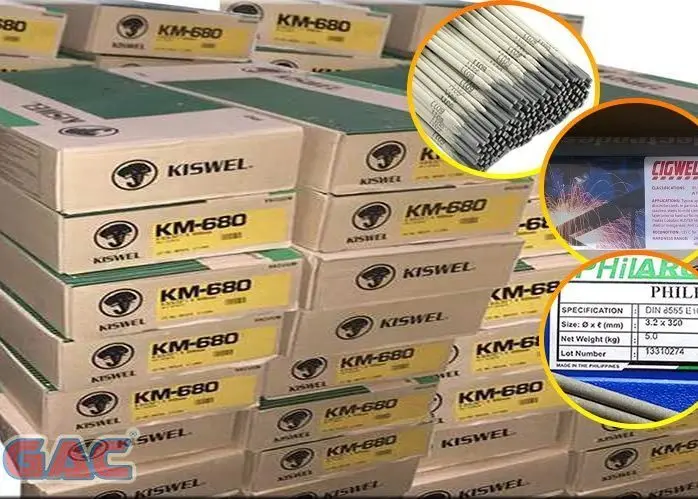
Guide to selecting hardfacing welding electrodes for hammers and wear-resistant rollers in heavy industry. Below are the hardfacing electrode products currently available on the market for your reference.
PRODUCTS
1. Hardfacing Welding Electrodes for Low-Stress Abrasive Wear
There are 3 electrode types:
+ FW-1101
Chemical Composition:
C: 2.0—3.5
B: +
Cr: 9—18
Others: 4.0
Hardness: 55–62 HRC
Applications: Repairing or hardfacing components and equipment used in mining, steel manufacturing, cement production, petrochemical plants, construction, pulp and paper industries, etc.
Description: The weld deposit provides excellent abrasion resistance under low-stress conditions while also being suitable for applications involving high impact loads. A two-layer overlay with a total thickness of approximately 6 mm is recommended. In some cases, a buffer layer may be required depending on the condition of the base component.
+ FW-1102
Chemical Composition:
C: 2.5—4.5
B: +
Cr: 13—25
Others: 8.0
Hardness: 62–65 HRC
Applications: Repairing or hardfacing components and equipment used in mining, steel production, cement manufacturing, petrochemical plants, construction, pulp and paper industries, etc. This electrode has been successfully used on coal conveyor plates and various mixing equipment.
Description: The weld deposit offers superior abrasion resistance under low-stress conditions but is not suitable for applications involving heavy impact or shock loading. A single overlay layer generally provides the best results. Depending on the base material and its condition, a buffer layer may be required.
+ FW-1103
Chemical Composition:
C: 1.0—5.0
B: +
Cr: 15—22
Others: 10—15
Hardness: 63–66 HRC
Applications: Repairing or hardfacing components and equipment used in mining, steel manufacturing, cement production, petrochemical plants, construction, pulp and paper industries. FW-1103 is particularly suitable for localized areas experiencing the most severe wear, while FW-1102 can be used for general areas.
Description: This electrode provides the highest low-stress abrasion resistance among the FW-11xx series and offers excellent thermal stability. A single overlay layer is generally sufficient for optimal performance. Maximum service temperature can reach 700°C. Buffer layers may be required in certain applications.
2. Hardfacing Welding Electrodes for Gouging and Grooving Wear Resistance
There is 1 electrode type:
+ FW-2101
Chemical Composition:
C: 1.1—1.5
Cr: 4.5—5.0
Others: 8—10
Hardness: 40–50 HRC
Applications: Repairing or hardfacing components and equipment used in quarrying, mining, steel production, pulp and paper manufacturing, waste processing, road construction equipment, etc.
Description: Suitable for gouging and grooving abrasion under moderate impact conditions. Welding temperature is approximately 450°C. A maximum of three overlay layers with a total thickness of 10 mm is recommended.
3. Hardfacing Welding Electrodes for High-Stress Abrasive Wear
There is 1 electrode type:
+ FW-2102
Chemical Composition:
C: 3.0—4.0
Cr: 18—30
Others: 8.0
Hardness: 55–60 HRC
Applications: Repairing or hardfacing components and equipment used in quarrying, mining, construction, steel manufacturing, petrochemical plants, crushers, and grinding mills. The hardfacing material significantly improves both service performance and equipment lifespan.
Description: Suitable for high-pressure crushing applications with moderate impact. A maximum of three overlay layers with a total thickness of 8 mm is recommended. Buffer layers may be required for certain specialized applications.
4. Hardfacing Welding Electrodes for Severe Abrasion and Impact under High Pressure
There is 1 electrode type:
+ FW-2103
Chemical Composition:
C: 1.5—3.0
B: +
Cr: 18—24
Others: 5.0—10
Hardness: 60–64 HRC
Applications: Repairing or hardfacing components and equipment used in thermal power plants, hydropower stations, steel manufacturing and processing, cement production, construction, mining, and mineral processing. This material has been widely applied to low-hardness grinding applications (such as coal) and significantly extends service life.
Description: Suitable for high-pressure abrasion and high-angle erosive wear under minimal impact conditions. A maximum of three overlay layers with a total thickness of 8 mm is recommended. Buffer layers may be required depending on specific application conditions.
5. Hardfacing Welding Electrodes for High-Temperature Wear Resistance
There are 4 electrode types:
+ FW-3101
Chemical Composition:
C: 4.0—6.0
Cr: 18—25
Others: 15—20
Hardness:
63–65 HRC at 20°C
40–44 HRC at 600°C
Applications: Repairing or hardfacing components operating at elevated temperatures in iron and steel production, coke plants, sintering plants, cement manufacturing, etc.
Description: Suitable for high-temperature abrasion with low-angle impact. A maximum of two overlay layers with a total thickness of 6 mm is recommended. FW-2101 is commonly used as a buffer layer. Maximum operating temperature can reach 700°C.
+ FW-3102
Chemical Composition:
C: 1.0—3.0
B: +
Cr: 13—20
Others: 15—20
Hardness:
* 64–66 HRC @ 20°C
* 48–52 HRC @ 600°C
* 38–42 HRC @ 800°C
Applications: Repairing or hardfacing components operating at elevated temperatures in iron and steel manufacturing, coke production, sintering plants, cement production, etc. This electrode has been successfully applied to hot grinding rollers, hoppers, and furnace dividers, significantly improving service life.
Description: Suitable for high-temperature abrasion with low-angle impact. A single overlay layer provides optimal performance. FW-2101 is commonly used as a buffer layer. Maximum operating temperature can reach 1000°C.
+ FW-3103
Chemical Composition:
C: 1.0—4.0
B: +
Cr: 15—22
Others: 15—18
Hardness:
* 50–55 HRC @ 20°C
* 38–45 HRC @ 600°C
* 28–36 HRC @ 800°C
Applications: Repairing or hardfacing hot cutting blades and high-temperature valve seats.
Description: Suitable for metal-to-metal wear applications. This electrode can be used as a replacement for GoGrW alloy.
+ FW-3104
Chemical Composition:
C: 1.0—3.5
B: +
Cr: 14—22
Others: 15—20
Hardness:
* 58–62 HRC @ 20°C
* 40–48 HRC @ 600°C
* 30–38 HRC @ 800°C
Applications: Repairing or hardfacing components operating at elevated temperatures in iron and steel production, coke plants, sintering plants, cement manufacturing, etc. When used together with FW-3102, it significantly improves component performance depending on the level of impact and compressive loading.
Description: Suitable for high-temperature abrasive wear under moderate impact conditions, medium-sized abrasive particles, and high impact angles. A maximum of three overlay layers with a total thickness of 8 mm is recommended. FW-2101 may be used as a buffer layer. Maximum operating temperature can reach 900°C.
6. Hardfacing Welding Electrodes for Heavy Impact Buffer Layers
There are 2 types of welding electrodes.
+ FW-4101
Chemical Composition:
C: 0.12
Mn: 6.0
Cr: 18–20
Ni: 8–10
S: ≤0.035
P: ≤0.04
Hardness:
* 40–45 HRC (As Welded)
* 89–92 HRC (After Work Hardening)
Applications:
Used for welding high-manganese steel or dissimilar metal joints. Suitable for repair or hardfacing of components subjected to severe impact loads, such as metalworking tools, forging dies, bulldozers, crane wheels, tractor wheels, and excavator undercarriages.
Description:
Suitable for hardfacing components exposed to heavy impact loads or for use as a buffer layer. When welding high-manganese steel or dissimilar joints, FW-4101 significantly improves joint toughness and crack resistance.
+ FW-4102
Chemical Composition:
C: 1.0–3.0
Mn: 13–17
Cr: 13–16
Others: 4.0
Hardness:
* 18–22 HRC (As Welded)
* 50–55 HRC (After Work Hardening)
Applications:
Suitable for repairing or hardfacing components subjected to heavy compressive loads, including stone crusher rollers, excavators, railway switches, and hydraulic turbines operating under impact conditions. This electrode is an excellent choice for repairing or hardfacing coal conveyor components.
Description:
Ideal for hardfacing components exposed to heavy impact loads or for use as a buffer layer.
7. Hardfacing Welding Electrodes for Severe Impact Resistance
There is 1 type of welding electrode.
+ FW-4103
Chemical Composition:
C: 0.6–1.0
Mn: 12–16
Ni: 2.0–5.0
Cr: 0.6–1.0
Hardness:
* 18–22 HRC (As Welded)
* 50–55 HRC (After Work Hardening)
Applications:
Used for repairing or hardfacing stone crusher components, railway frogs, and similar equipment.
Description:
Designed for hardfacing components operating under extremely heavy impact loads. It is an ideal material for repairing or hardfacing hard-rock crusher rollers (such as granite crushers), rotary crusher liners, and crusher hammers.
8. Hardfacing Welding Electrodes for Cold Working Tools and Dies
There are 3 types of welding electrodes.
+ FW-6101
Chemical Composition:
C: 0.12
Si: 0.4–1.0
Mn: 0.2–0.8
Cr: 6.0–9.0
Hardness:
56–62 HRC when deposited directly on cast iron.
Applications:
Used for repairing or hardfacing cast iron stamping dies, forming dies, cast iron trimming tools, and cutting blades. Particularly suitable for sheet metal dies (typically made of cast iron).
Description:
Can be deposited directly without preheating or buffer layers.
+ FW-6102
Chemical Composition:
C: 0.12
Mn: 2.0–3.0
Mo: 2.0–3.0
V: 5.0–8.0
Others: 2.0
Hardness:
≤35 HRC when deposited directly on cast iron with more than two layers.
Applications:
Used for repairing or hardfacing cast iron pressing dies, forming dies, and other cast iron molds. In certain applications, it can also serve as a buffer layer for other hardfacing materials.
Description:
Suitable for hardfacing gray cast iron, ductile iron, alloy cast iron, or repairing casting defects.
+ FW-6103
Chemical Composition:
C: 0.5
Mn: 0.6–1.0
Mo: 0.8–1.5
Cr: 5.5–7.5
Others: 3.5
Hardness:
58 HRC
Applications:
Used for repairing or hardfacing medium and large punching dies, or hardfacing carbon steel cutting blades as a replacement for tool steel blades.
Description:
The deposited layer is air-hardening and crack-resistant without requiring preheating. It provides excellent resistance to compression, impact, and metal-to-metal wear.
9. Hardfacing Welding Electrodes for Hot Working Tools and Dies
There are 3 types of welding electrodes.
+ FW-7101
Chemical Composition:
C: 0.2
Si: 0.6–1.2
Mn: 1.0–2.0
Cr: 4.0–12
Others: 3.0
Hardness:
≥40 HRC
Applications:
Primarily used for repairing or hardfacing hot forging dies made of 5CrMnMo, 5CrNiMo, 5CrNiSiW, H13, etc. Also suitable for repairing hot rolling mill rolls.
Description:
The deposited layer provides excellent resistance to thermal fatigue, thermal shock, and metal-to-metal wear.
+ FW-7102
Chemical Composition:
C: 0.3
Cr: 3.0
W: 5.0
Others: 2.0
Hardness:
45 HRC
Applications:
Mainly used for manufacturing or repairing hot-working tools and dies.
Description:
Provides excellent resistance to thermal fatigue and high-temperature metal-to-metal wear.
+ FW-7103
Chemical Composition:
C: 0.4
Cr: 4.5–7.0
Mo: 1.2–2.0
V: 0.3–1.0
Others: 2.0
Hardness:
52–58 HRC
Applications:
Mainly used for manufacturing or repairing heavy-duty hot working tools, including hot forging dies and hot stamping dies.
Description:
The deposited layer offers excellent resistance to thermal fatigue, thermal shock, and metal-to-metal wear.
10. Martensitic Hardfacing Welding Electrodes
There are 6 types of welding electrodes:
+ FW-8101
Chemical Composition:
C: 0.12
Si: 0.4–0.8
Mn: 0.6–1.5
B: +
Cr: 1.8–3.2
Hardness: 30–38 HRC
Applications:
Used for repairing or hardfacing drive shafts, gears, drive wheels, electric wheels, track guide wheels, load-bearing wheels, guide rollers, carbon steel railway rails, and similar components.
Description:
The deposited layer has a martensitic structure, offering high strength while maintaining relatively low hardness for easy machining. It can be further hardened through heat treatment and is suitable for metal-to-metal wear applications.
+ FW-8102
Chemical Composition:
C: 0.12
Si: 0.4–1.0
Mn: 1.2–1.8
Cr: 3.0–6.0
Others: 2.0
Hardness: 40–45 HRC
Applications:
Used for repairing and hardfacing components requiring high hardness and excellent wear resistance, such as railway rails, shafts, gears, roller tables, continuous caster rollers, vertical mill rollers, track rollers, guide rollers, carbon steel railway crossings, asphalt paver rollers, etc.
Description:
The martensitic weld deposit provides high strength, excellent impact resistance, and outstanding resistance to metal-to-metal wear.
+ FW-8103
Chemical Composition:
C: 0.5
Si: 0.6–1.2
Mn: 1.1–1.5
Cr: 6.0–7.5
Mo: 1.1–3.0
Hardness: 58 HRC
Applications:
Hardfacing of stone crusher components, dredging equipment, rubber calender machines, excavator bucket teeth, crusher hammers, pulverizer wheels, mixers, and similar equipment.
Description:
When deposited directly onto carbon steel or alloy steel, the weld layer provides excellent resistance to abrasion and metal-to-metal wear under heavy impact loading.
+ FW-8104
Chemical Composition:
C: 0.3
Si: 0.4–0.8
Cr: 6.0–9.0
Mo: 1.0–3.5
Others: 0.8–2.5
Hardness: 56–60 HRC
Applications:
Can be deposited directly onto cast iron without a buffer layer. Commonly used for repairing or hardfacing juice extractor rollers, wood cutting machines, crusher blades, cable drilling gear rings, chisels, coke oven trolley sprockets, and similar components.
Description:
The air-cooled weld deposit offers high strength, excellent crack resistance, and outstanding protection against abrasion and metal-to-metal wear under heavy impact conditions.
+ FW-8105
Chemical Composition:
C: 0.5
Si: 2.0–3.0
Mn: 0.4
Cr: 6.0–11
Hardness: 56 HRC
Applications:
Suitable for hardfacing high-manganese steel without requiring a buffer layer. Commonly used for repairing or hardfacing jaw crusher wear plates, excavator teeth, cone crusher mantle liners, ball mill liners, wear plates, and similar components.
Description:
The air-cooled weld deposit provides high strength, excellent crack resistance, and superior resistance to abrasion and metal-to-metal wear under heavy impact loading. It is also suitable for elevated temperature service (up to 450°C).
+ FW-8106
Chemical Composition:
C: 0.15
Cr: 12–15
Ni: 1.0–4.0
S: ≤0.03
P: ≤0.04
Others: 4.0
Hardness: 42–48 HRC
Applications:
Primarily used for hardfacing valve sealing surfaces operating at temperatures up to 600°C, providing excellent resistance to oil-induced corrosion.
Description:
The deposited layer features a homogeneous microstructure with high tensile strength and excellent corrosion fatigue resistance, delivering superior resistance to metal-to-metal wear.
11. Hardfacing Welding Electrodes for Sand Abrasion and Cavitation Resistance (Pitting & Erosion)
There is 1 type of welding electrode.
+ FW-9101
Chemical Composition:
C: 0.12
Cr: 12–15
Ni: 3.0–6.0
S: ≤0.03
P: ≤0.04
Others: 4.0
Hardness: 45 HRC
Applications:
Mainly used for repairing or hardfacing turbine blades, circulating pump impellers, propeller sleeves, and similar components.
Description:
The deposited layer has a homogeneous structure with high tensile strength and excellent corrosion fatigue resistance, providing superior protection against cavitation erosion and abrasive wear.
12. Tubular Hardfacing Welding Rods
There are 3 types of tubular welding rods.
+ FW-5001
Hardness: ≥60 HRC
Applications:
Repairing or hardfacing concrete mixer blades, dredger components, crusher hanger assemblies, scraper blades, dredge pump blades, drill pipe joints, coal picks, auger drill bits, vertical saw teeth, and similar components.
+ FW-5002
Hardness: ≥60 HRC
Applications:
Repairing or hardfacing drill pipe joints, coal picks, auger drill bits, vertical saw teeth, and related equipment.
+ FW-5003
Hardness: ≥60 HRC
Applications:
Repairing or hardfacing concrete mixer blades, dredger components, crusher hanger assemblies, scraper blades, dredge pump blades, drill pipe joints, coal picks, auger drill bits, vertical saw teeth, and similar applications.
→ FW-5001 to FW-5003 are tubular tungsten carbide hardfacing welding rods. The deposited layer is a composite alloy consisting of a steel matrix reinforced with tungsten carbide particles. The tungsten carbide particles do not melt during welding, allowing them to retain their exceptional hardness and significantly improve wear resistance together with the steel matrix. These electrodes are suitable for both manual arc welding (SMAW) and oxy-acetylene welding.
For FW-5001, the hard particles are tungsten carbide with a WC content of ≥50%, and the tungsten carbide particle size is ≤60 mesh.
For FW-5002, the hard particles are tungsten carbide with a WC content of ≥50%, and the tungsten carbide particle size is ≤20 mesh.
For FW-5003, the hard particles are tungsten carbide with a WC content of ≥50%, and the tungsten carbide particle size is ≤30 mesh.