
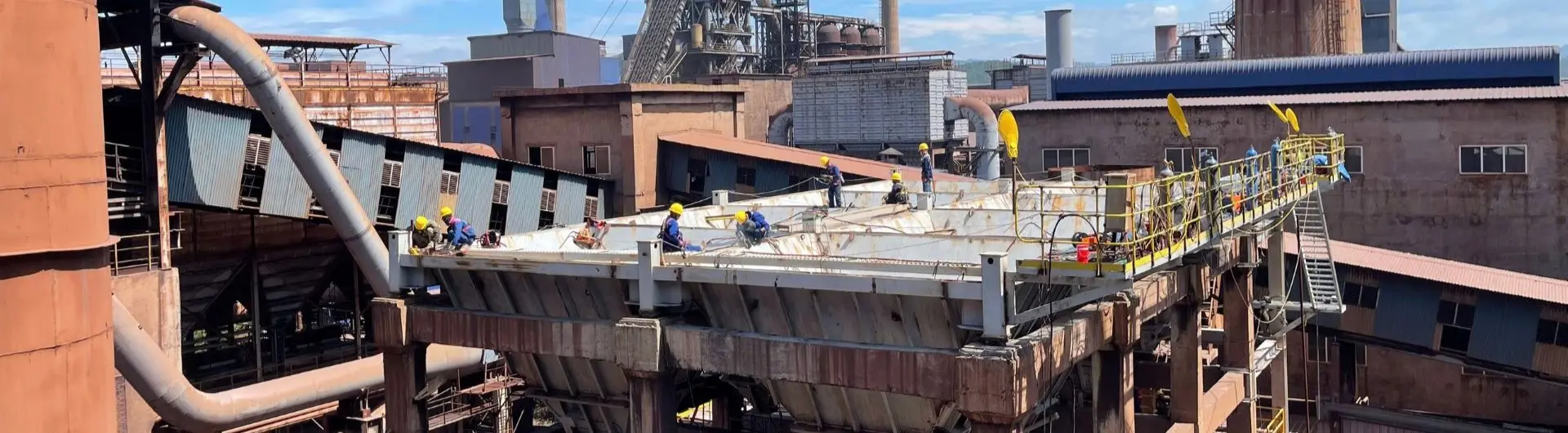
Hardox® HiAce: When Abrasion, Corrosion and High Temperatures Come Together

In many types of industrial equipment, wear does not occur in isolation. Components may be exposed to abrasive particles, corrosive environments and elevated temperatures at the same time. When all three factors are present, simply increasing the hardness of the steel may not be enough to solve the problem. This is one of the reasons SSAB developed Hardox® HiAce – an abrasion-resistant steel designed for environments where abrasion, corrosion and elevated temperatures act simultaneously on equipment.
According to SSAB’s announcement on March 4, 2026, Hardox® HiAce is engineered to maintain hardness, yield strength and toughness comparable to Hardox® 450, while providing enhanced performance in applications involving a combination of abrasion, corrosion and high temperatures.
When hardness alone is not enough
In industrial environments with high or low pH levels, equipment can be subjected simultaneously to friction, impact and chemical attack. Acids, sulfates, ammonia and salts can accelerate oxidation of the steel surface. When this occurs together with mechanical abrasion, material degradation can increase significantly.
This is an important distinction. A material with high hardness may perform well against abrasive particles, but that does not necessarily mean it is suitable when the surface is also exposed to chemical corrosion.
Stainless steel, on the other hand, offers advantages in many corrosive environments. However, when abrasion and impact are also present, its lower hardness can become a limiting factor. Hardox® HiAce was developed by SSAB specifically for this overlap: applications that require hardness for abrasion resistance while also demanding reliable performance in corrosive environments.
This approach is also consistent with how GAC evaluates material selection. There is no single material that is best for every wear location. The appropriate material should be selected according to the actual combination of operating conditions, including abrasion, heat, impact and corrosion.
How does Hardox® HiAce compare with stainless steel and conventional abrasion-resistant steel?
SSAB conducted internal testing under abrasive pH 4 conditions, comparing Hardox® HiAce with stainless steel S304 and AR 400 steel.
The results published by SSAB are shown below:
Under these specific test conditions, SSAB reported that Hardox® HiAce achieved up to 20% longer service life than stainless steel S304, with no signs of pitting corrosion. Importantly, the table above should not be interpreted as meaning that Hardox® HiAce will always outperform stainless steel or AR 400 in every application.
SSAB clearly states that the service-life and cost figures shown are relative values based on the test and real-world conditions at the time of evaluation. They should not be interpreted as guaranteed results for specific applications.
In other words, the right question is not:
“Is Hardox® HiAce better than material X?”
A more relevant question is:
“What are the actual wear and degradation mechanisms at this specific equipment location?”
Results after six years in a garbage truck application
One field application monitored by SSAB involved a garbage truck operated by the Swedish company Allmiljö. The stainless steel S304 floor was replaced with Hardox® HiAce and monitored for approximately six years, corresponding to 106,000 km of operation.
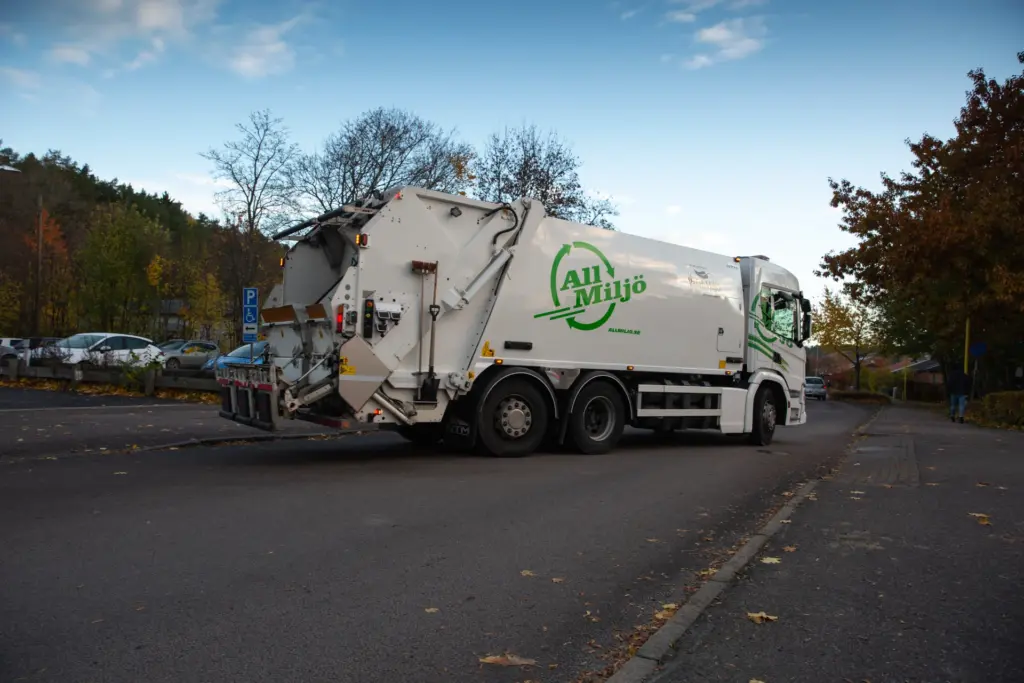
According to SSAB, after this period:
- approximately 40% wear was measured at the most heavily exposed point;
- no pitting corrosion was observed;
- the integrity of the floor remained intact.
This application is particularly relevant because the garbage truck floor is exposed to more than mechanical abrasion. Waste materials and associated liquids also create corrosive conditions, making this a case of combined abrasion and corrosion rather than abrasion alone.
Hardox® HiAce in high-temperature environments
One of the most notable points in SSAB’s March 2026 announcement is the material’s performance at elevated temperatures. According to SSAB, Hardox® HiAce can maintain its properties and wear resistance at temperatures of at least up to 400°C.
This is relevant for equipment locations that are continuously or periodically exposed to heat spikes, where conventional abrasion-resistant steels may experience a reduction in hardness and wear resistance as temperatures increase.
SSAB has applied Hardox® HiAce at its coke plant in Oxelösund, Sweden.
After red-hot coke exits the furnaces, it is water-cooled and then discharged onto sliding ramps while still at a very high temperature. This creates an operating environment involving several simultaneous factors:
- abrasive material;
- impact;
- high temperatures;
- mild to moderate corrosive conditions.
When one of the sliding ramps required replacement liner plates, Hardox® HiAce was selected for the application. After several months of operation, SSAB reported that measured wear levels were lower than initially anticipated.
Which applications should be considered for Hardox® HiAce?
According to SSAB, potential high-temperature applications for Hardox® HiAce in steel mills include quenching wagons, cooling beds, slag tippers and furnace inlet scrapers.
Outside the steel industry, SSAB also identifies applications such as:
- dryer drums and lifter plates in asphalt plants;
- clinker cooler plates and liner plates in cement plants;
- ash-handling equipment and chain conveyors in power plants;
- scrapers and screening equipment in foundries;
- crusher liner plates and clinker hammers.
At GAC, Hardox® HiAce is considered within the category of abrasion-resistant steels for corrosive environments and is particularly relevant when mechanical abrasion is not the only factor affecting equipment service life.
What should be evaluated before selecting Hardox® HiAce?
Good material properties do not replace the need for an accurate assessment of operating conditions.
Before deciding whether to use Hardox® HiAce, several key factors should be evaluated:
Wear mechanism: Is the material sliding, impacting or cutting against the surface?
Corrosive environment: Is the equipment exposed to moisture, acids, salts or other chemicals? What is the actual pH level under operating conditions?
Temperature: What is the continuous operating temperature? Are there temporary or periodic heat spikes?
Impact: What level of impact energy is present at the location requiring protection?
Fabrication and installation requirements: What cutting, bending, welding or other fabrication processes are required for the component geometry?
Even within the same piece of equipment, two locations positioned close to each other may be exposed to very different wear mechanisms. The fact that Hardox® HiAce is suitable for one location does not mean that the entire equipment system needs to use the same material.
This is why GAC approaches material selection by starting with the actual operating conditions, rather than with a specific steel grade.
Is Hardox® HiAce the right choice for your equipment?
Hardox® HiAce extends the application range of abrasion-resistant steel into more demanding environments, particularly where abrasion is combined with corrosion or elevated temperatures. However, material selection should still be based on the specific equipment location and its actual operating conditions.
If your equipment is experiencing accelerated wear, surface corrosion, liner plate perforation or reduced material service life at elevated temperatures, GAC’s technical team can review the operating conditions with you and help identify the appropriate material category before selecting a specific grade.
Send GAC information about the equipment location, material being handled, operating temperature, wear mechanism and working environment for an initial material assessment.
Reference:
This article was prepared by GAC based on technical information published by SSAB:
SSAB – “Hardox® HiAce steel sets new standard in corrosive wear and high-heat environments”, March 4, 2026.
Read the original article on the SSAB website
The test results, service-life data and application cases presented in this article are based on information published by SSAB. Actual material performance may vary depending on equipment design and specific operating conditions.


